CHAPTER 1: The Photo in the Dark
Part 1
My ex-husband Mark accidentally sent me a photo of himself in a maternity ward, grinning while holding newborn twins alongside my former best friend, Sarah.
We had finalized our divorce four months ago, yet we still co-owned the design firm I built from my late mother’s garage with $85,000 of her life savings.
He followed the photo with a hasty text claiming it was sent by mistake to the wrong contact, but the timestamp and hospital tag showed the babies were born three days prior.
When I checked our shared corporate treasury account an hour later, $310,000 had been quietly transferred to an undisclosed LLC registered in Sarah’s name.
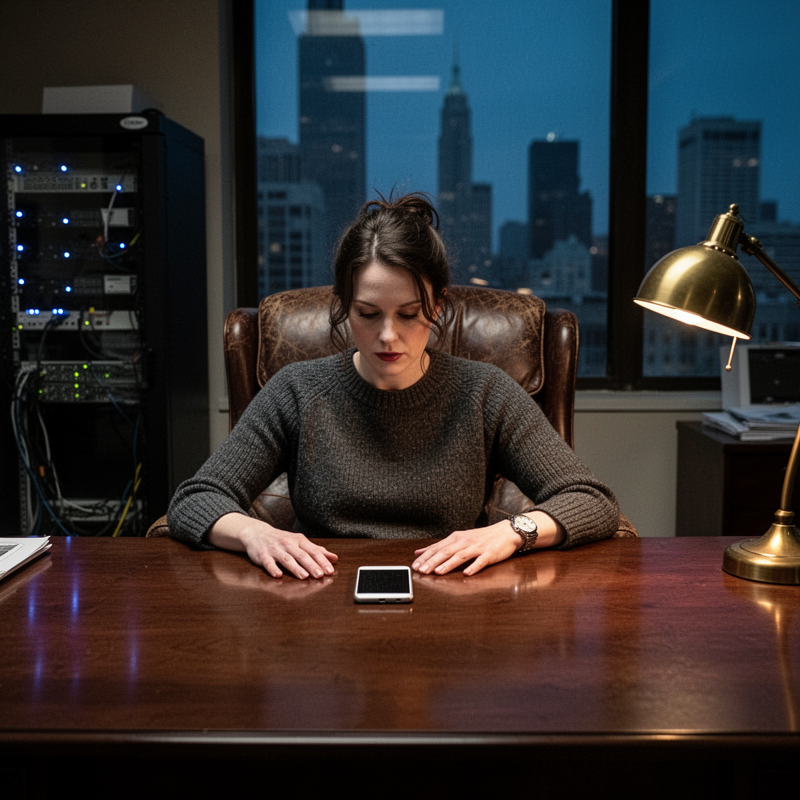
Claire Holloway leaned back in her chair, the worn leather of her mother’s desk a familiar comfort beneath her fingertips. It was nearly seven in the evening.
The last of the junior designers had left hours ago. Only the low hum of the server rack broke the silence in the Holloway-Bennett Design office.
Six months had passed since her mother, Eleanor, had died. The ache of her absence remained a physical weight in Claire’s chest.
This firm was her mother’s legacy, built on an $85,000 inheritance and Claire’s tireless effort. Now, it was meant to be hers, slowly transitioning away from Mark.
Her phone vibrated on the polished wood. An incoming message from Mark. Claire tensed.
Their divorce had been final for four months. She’d thought the break was clean, definitive. There was no reason for him to be contacting her.
A flicker of irritation, overriding her better judgment, made her tap open the message.
The image that bloomed on her screen snatched her breath away. It was Mark. He was grinning, beaming, his arm wrapped tightly around Sarah Jenkins.
Her former best friend.
Sarah’s face was radiant, her eyes fixed on two tiny bundles she and Mark held. Newborns. Twins.
The sterile white of a hospital room formed the backdrop, with medical equipment just visible in the periphery. Small, plastic wristbands were clearly visible on the babies’ tiny arms.
Claire zoomed in, her finger trembling. The wristbands displayed “Baby A” and “Baby B.” Below that, a date: “September 12th.”
Today was September 15th. The babies had been born three days ago.
A sharp, almost physical pain constricted her chest. Sarah. Her best friend. Now, she was with Mark. They had children together. The quiet, profound intimacy of the scene twisted her stomach.
The betrayal was a bitter, metallic taste in her mouth.
Another notification flashed across her screen. A text from Mark. It came rapid-fire, almost desperate.
“CLAIRE OMG ignore that! WRONG CONTACT! Totally a mistake!”
Her fingers, still unsteady, typed out a reply.
“What is this, Mark?”
No immediate response. He was probably scrambling, trying to undo what couldn’t be undone. The image was seared into her mind.
The emotional shock slowly gave way to a cold, creeping dread. Mark. Sarah. The babies. And the business. Holloway-Bennett Design. The firm they still co-owned.
He was still managing it, remotely, until the final buyout agreement was signed next month.
Her gaze drifted to the glowing screen of her work laptop. The Holloway-Bennett corporate treasury account was bookmarked, an automatic reflex.
It had become a necessary evil, now that trust was a concept shattered beyond repair.
Her heart pounded, a heavy drumbeat against her ribs. She navigated to the bank’s secure portal. The multi-factor authentication she had insisted on after the divorce, a small victory she’d once thought, felt like a joke now.
The main dashboard loaded. Her eyes scanned the recent activity, a familiar, painful routine. Then they snagged on a single line, highlighted in crisp, digital green.
A wire transfer. It was dated this morning. September 15th.
It was for $310,000.
Her stomach dropped, a sickening lurch. She didn’t recognize the recipient. Clicking on the transaction details, her vision blurred.
“To: S. Jenkins & Associates LLC.”
Sarah. Jenkins. The LLC was registered in Sarah’s name. An undisclosed entity.
The cold dread solidified into icy terror. The divorce agreement had clearly stipulated a freeze on all large capital movements without mutual consent.
How could this have happened? How could he do this?
She tried to rationalize it. A legitimate business expense? A supplier payment? But $310,000? To Sarah’s LLC? And now, after he’d just sent her a photo of them with their newborns?
No. This was something else entirely. Something far, far worse.
The firm’s reserves, the very foundation built by her mother, were being siphoned off. Mark hadn’t just moved on to start a new family with her best friend. He was actively, systematically, dismantling her legacy, piece by piece, right under her nose.
She stared at the screen, the figures mocking her, the full weight of the betrayal crashing down. Her ex-husband, the father of Sarah’s newborn twins, had just gutted their company account.
And there was nothing she could do to stop the transfer, not now that it had already gone through.
Part 2
The realization hit me like a physical blow, stealing the air from my lungs. I closed the laptop with a snap, the sound echoing in the silent office.
My mother’s house. That was where I needed to be. The place still held her scent, her quiet strength. Julian, my younger brother, was supposed to meet me there anyway, to tackle the mountain of unread estate boxes.
I drove on autopilot, the city lights blurring through a haze of shock and disbelief. When I pulled into the driveway, Julian’s car was already there. He was waiting on the porch, a somber look on his face.
“Claire,” he said, his voice low, as I climbed the steps. He didn’t ask what was wrong. He just knew. He always knew.
Inside, the living room was filled with cardboard boxes, testament to the life my mother had lived and the grief we were still processing. I sank onto the familiar couch.
“I saw the transfer,” I managed, my voice raspy. “$310,000 to Sarah’s LLC. Today.”
Julian nodded slowly, his gaze distant. “I didn’t wait for your call, Claire. I’ve been watching Mark.”
My head snapped up. “What are you talking about?”
He walked over to a stack of files on the coffee table. “Something felt off after Mom passed. Just… things with the business. He was too eager to take over more responsibilities. So, I started digging, quietly.”
He pushed a thick bank printout towards me. “I opened a private inquiry three months ago. Ran some forensic checks, focused on the property deeds first.”
My eyes scanned the documents. Pages and pages of transactions, small withdrawals, larger ones, all dating back.
“He took out a second mortgage on the main office building,” Julian said, his voice flat, devoid of emotion. “An unauthorized one. For $800,000.”
My breath hitched. “What? That’s impossible. We never approved that.”
“He did it anyway,” Julian confirmed, tapping a line on the printout. “It was secured using the building as collateral. He processed it three months ago, behind our backs. And this…” He pushed the multi-page report closer. “This isn’t just one transfer. This is a pattern. It goes back almost two years.”
CHAPTER 2: The Sealed Manila Envelope
The cardboard box sitting on my mother’s dining table smelled like dry paper and old lavender soap.
Julian pulled off the packing tape with a sharp snap. He set aside three years of paid medical bills and property tax receipts before reaching the bottom layer.
“There’s one more thing,” Julian said quietly.
He lifted a thick manila envelope. My mother had written my name across the center in dark blue ink, dated twenty-one days before her heart failed in hospice care.
I broke the paper seal with my thumb.
Inside was a handwritten letter folded around a single sheet of watermarked paper. The attached sheet was a bank photocopy of a cashier’s check dated six years ago, drawn from my mother’s personal account for $85,000.
The memo line had two words written in Mark’s distinct, slanted cursive: *Equity Clearance.*
I read my mother’s handwriting aloud, her steady script filling the quiet room.
*Claire, if you are reading this, I am no longer there to hold your hand. Six years ago, when Holloway-Bennett was barely taking its first projects, Mark took out a high-interest private loan against his non-existent shares to cover personal gambling debts.*
*The lender threatened to place a lien on our family garage before we even had a real office. I paid off his debt from my savings to keep the firm alive and to protect your peace of mind while you were designing your first commercial project.*
*Mark swore he would never put our family at risk again. He begged me not to tell you, claiming the shame would destroy your marriage.*
*I stayed quiet to protect your heart, but my silence was a mistake. Watch the books, my sweet girl. A man who steals from his home once will do it again when the house starts to shake.*
Julian leaned over my shoulder, staring at the cashier’s check. His hand tightened into a fist against the wood table.
“He started lying before the ink was even dry on your business license,” Julian said.
“My mother paid $85,000 of her life savings to cover his debt,” I whispered. “And six years later, he took another $310,000 the week she died.”
Julian took the letter from my hands and placed it carefully into a plastic document sleeve.
“This proves habit and intent,” Julian said. “He didn’t make a mistake. He was waiting for her to die so no one would remember.”
CHAPTER 3: The Registry Record
The basement of the county land registry building smelled of damp concrete and heavy paper files.
Julian stood at the public terminal counter while Arthur Pendelton, a low-level land records clerk with thin silver hair and a stained tie, pulled the physical binder for our commercial office building.
“File number 408-B,” Pendelton muttered, sliding the navy binder across the laminate desk. “Mortgage modification recorded six months ago.”
Julian flipped directly to the execution page.
The official county stamp on the bottom right corner read *October 14*.
“That’s strange,” Julian said, tapping his finger against the purple ink. “The divorce decree was finalized on November 2. But the ink on this stamp is blurred, and the entry number doesn’t match the sequential ledger.”
Pendelton reached out and pulled the binder back two inches toward his chest.
“The stamp is fine, sir,” Pendelton said quickly. His fingers twitched against the plastic edge of the folder. “Sometimes the ink pads dry out. It was logged in the system before your settlement.”
“Let me see the digital audit log on your screen,” Julian said. “The electronic log tracks every manual entry down to the minute.”
“The system is down for routine maintenance today,” Pendelton said. He closed the navy binder with a heavy thud. “Public access is restricted until Thursday.”
Julian did not move. He looked at Pendelton’s neck, where a bead of sweat was collecting above his collar.
“My sister co-owns that building,” Julian said, keeping his voice level. “If a second mortgage for $800,000 was filed, both signatures had to be notarized in this room.”
“Everything was processed according to standard procedure,” Pendelton insisted, his voice rising slightly. “If you have a problem with the filing date, take it up with the court.”
Julian turned and walked out to the parking lot where I was waiting in my car.
He opened the passenger door and slid into the seat, holding a high-resolution photo he had taken on his phone before Pendelton closed the binder.
“The stamp date was manually altered,” Julian said, zooming in on the image. “Look at the ink bleeding around the number four. Pendelton used an old hand stamp to backdate an $800,000 mortgage before your divorce was finalized.”
“Why would an official risk his job for Mark?” I asked.
“Because Mark didn’t just ask for a favor,” Julian said. “He paid him.”
CHAPTER 4: The Silent Audit
By Thursday morning, the forensic accountant Julian hired sat in our dining room with four three-ring binders spread across the table.
Her name was Brenda Vance. She was a retired state tax auditor who specialized in commercial fraud.
“I went through every subcontract processed under Sarah Jenkins Interior Design over the past twenty-four months,” Brenda said, tapping a red pen against a spread of printed invoices.
“What did you find?” I asked.
“Six hundred thousand dollars in consulting fees for five separate commercial projects,” Brenda said. “All five projects were logged as ‘preliminary spatial planning’.”
She pulled up a digital blueprint on her tablet.
“The problem is,” Brenda continued, “three of those buildings were never built. The development permits were denied by the city eight months before these checks were written.”
I looked at the dates on the invoices.
The checks were signed by Mark in monthly installments of $50,000. The payments began the exact week my mother entered hospice care.
While I was spending eighteen hours a day sitting beside my mother’s hospital bed, adjusting her oxygen lines and holding her hand in the dark, Mark was approving payments to my former best friend for work that didn’t exist.
“It wasn’t just an affair,” I said, the realization settling like cold lead in my chest. “He was using Sarah’s firm as a funnel.”
“Sarah wasn’t just receiving the money,” Brenda said. “She was withdrawing forty percent of each transfer in cash within twenty-four hours of receipt. The rest was wired out.”
“Wired where?” Julian asked.
“To a third party,” Brenda said. “An account that doesn’t appear anywhere on Holloway-Bennett’s official books.”
CHAPTER 5: The Shell Corporation
Julian spent Friday night cross-referencing corporate registration records across three states.
By Saturday afternoon, he held a single sheet of paper printed from the Delaware Division of Corporations database.
“The $310,000 wire transfer from your corporate treasury didn’t go to an offshore bank,” Julian said, setting the paper on my desk. “It went to an entity called SJ Capital Management LLC, registered eight weeks ago.”
“Sarah’s initials,” I said.
“Look at the secondary contact details on page two,” Julian said.
I looked down at the fine print under the registered agent block.
The emergency secondary phone line listed for the manager was a landline number with our local county area code.
Julian slid a printed reverse-phone lookup directory next to the filing.
The landline belonged to a residential address on Elm Street registered under the name of Martha Pendelton.
“Arthur Pendelton’s wife,” I said.
“Mark didn’t just bribe Pendelton with cash to backdate the $800,000 second mortgage,” Julian said. “He gave Pendelton’s family a direct cut of the shell company.”
“They set up a three-way network,” I said. “Mark diverted the company funds, Sarah laundered them through her design subcontracts, and Pendelton validated the fraudulent property liens to back up the loans.”
“And they used your mother’s death as the distraction window,” Julian said.
He picked up his keys from the desk.
“It’s time to stop looking at bank statements,” Julian said. “We have enough for the prosecutor.”
CHAPTER 6: The Unlisted Names
On Monday morning, a courier delivered a sealed white envelope marked *Confidential* to my mother’s house.
Inside was a certified copy of the state vital statistics registration for the newborn twins born at Saint Jude Hospital four days earlier.
I opened the document, my eyes tracking down to the bottom of the first page.
Under *Mother*, the record clearly listed Sarah Elizabeth Jenkins.
Under *Father*, the line was completely blank.
I turned to the second page. A official note from the registrar indicated that the mother had refused to supply paternity information at the time of birth and had registered both infants under her own maiden surname, Jenkins.
I sat back in my chair, staring at the paper.
When Mark accidentally sent me that photo from the maternity ward, he was standing beside the bed with a triumphant grin, claiming his new family.
“Look at the date of conception,” Julian said, pointing to the estimated clinical timeline attached to the filing.
The twins were conceived nine months ago—during the exact week my mother was admitted to the intensive care unit for her final treatment cycle.
“Mark thinks those babies are his ticket to a fresh start,” I said.
“He thinks he’s funding his new family,” Julian said. “But Sarah didn’t even put his name on the legal birth records.”
“She protected herself,” I said. “If Mark gets pulled down by the corporate fraud, her children are legally insulated from his liabilities.”
“Mark gave her $600,000 in fake consulting fees and a $310,000 treasury payout,” Julian said. “And he doesn’t even have his name on their birth certificates.”
CHAPTER 7: The Unopened Door
At eight o’clock on Tuesday night, I parked my car across the street from the Holloway-Bennett Design office building.
The street was dark and quiet. Rain drizzled steadily against my windshield.
Through the floor-to-ceiling glass windows of the main lobby, I saw the headlights of Mark’s silver sedan pull into the executive space.
He got out of his car, holding a black leather briefcase, and rushed toward the glass front doors.
He pulled his corporate keycard from his coat pocket and swiped it against the digital reader.
A sharp red light flashed twice. The lock did not click open.
Mark frowned, wiping rain from his forehead. He swiped the card again, faster this time.
Red light.
He pulled out his phone and typed his six-digit master administrative code into the door keypad.
An alarm beeped three times in quick succession.
I watched from my car as Mark punched the keys harder, his face turning red under the exterior floodlights.
Five hours earlier, Julian and I had submitted a formal corporate emergency motion to our board attorney, revoking Mark’s administrative IT privileges based on the unauthorized $310,000 wire transfer.
Mark stepped back, kicking the base of the aluminum frame with the heel of his shoe.
He pulled out his phone and dialed my number.
Inside my quiet car, my phone lit up on the passenger seat with his name and photo.
I did not pick it up. I watched the screen glow until the call went straight to voicemail.
Mark threw his arms up in the dark, pacing back and forth on the wet concrete entryway before getting back into his car and slamming the door.
I started my engine, turned my headlights off, and drove quietly into the rain.
CHAPTER 8: The Prosecutor’s Desk
The office of Assistant State Prosecutor Richard Ross was located on the fourth floor of the county courthouse.
The room was filled with green filing cabinets and stacks of legal briefs.
Ross sat behind a heavy oak desk, adjusting his wire-rimmed glasses as he read through the binder Julian and I had brought him.
On top of the stack sat my mother’s sealed letter, the cancelled $85,000 cashier’s check, the forensic audit of Sarah’s $600,000 consulting fees, and the high-resolution photo of the altered land registry stamp.
Ross spent twenty minutes reading in complete silence. He turned page after page without looking up.
When he reached the end of Brenda Vance’s forensic financial report, he set his glasses down on the blotter.
“This altered land stamp,” Ross said, pointing to the image of Arthur Pendelton’s file. “You have reason to believe Mr. Pendelton accepted money to backdate this $800,000 mortgage?”
“The secondary contact number for the Delaware shell corporation receiving the stolen funds belongs to Mr. Pendelton’s wife,” Julian said.
Ross turned his head toward a junior prosecutor sitting near the window.
“Draft an emergency freeze order for all accounts registered under Holloway-Bennett Design, Mark Bennett, and SJ Capital Management,” Ross said clearly. “Include a preservation demand for all county land registry server logs from October 1 to the present.”
Ross stood up and offered me his hand across the desk.
“Mrs. Holloway,” Ross said, “public corruption combined with multi-state wire fraud gets our full attention. This is no longer a civil dispute over business equity.”
“What happens now?” I asked.
“A state investigator will serve the freeze orders within the hour,” Ross said. “Mr. Bennett’s access to all commercial liquidity ends today.”
CHAPTER 9: The Gathering Storm
By Wednesday afternoon, Mark was standing in the lobby of his private defense attorney’s office five miles away.
He pulled out his personal black credit card to pay the $25,000 retainer fee required to fight our corporate injunction.
The receptionist ran the card through the electronic terminal.
A red error message flashed across the screen: *Transaction Declined – Account Frozen By Court Order.*
“Try it again,” Mark demanded, his voice echoing in the reception area. “There’s over $150,000 in liquid savings in that account.”
The receptionist swiped the card a second time. The same error appeared.
Mark pulled out his phone and dialed Arthur Pendelton’s direct line at the land registry office.
What Mark did not know was that two hours earlier, Agent Ross had served a master warrant on the county telecommunications office, placing an active line tap on Pendelton’s extension.
“Arthur, pick up!” Mark shouted into the receiver as he walked out toward the parking garage. “The state froze my personal checking! What did you do with the land files?”
Pendelton’s voice came through the receiver, thin and trembling.
“Mark, don’t call this line!” Pendelton stammered. “State investigators came to my office an hour ago. They seized the physical binder for 408-B. They took my desktop computer!”
“You told me the stamp was clean!” Mark yelled, slamming his hand against the stairwell railing. “I gave you $45,000 in cash in that parking lot!”
“I can’t do this, Mark,” Pendelton sobbed into the phone. “They know about my wife’s address on the Delaware filing. I’m taking a deal.”
“Arthur, shut up!” Mark screamed.
The line went dead.
Mark stood alone in the concrete stairwell, listening to the dial tone echo against the walls.
CHAPTER 10: The Unseen Collapse
On Thursday morning at nine o’clock, Mark arrived at the Holloway-Bennett headquarters building.
He believed he was attending an emergency confidential settlement meeting with my corporate attorney to negotiate the release of his frozen personal accounts.
He swung open the front glass door, carrying a thick binder of business records.
The lobby was completely silent.
My attorney was not sitting at the conference table. I was not there.
Instead, four plainclothes agents from the State Financial Crimes Division stood near the main server rack in the hallway. Two technicians were systematically disconnecting cables and sliding physical hard drives into anti-static bags.
At the front desk sat Special Agent Ross.
Mark froze in the doorway, his binder slipping an inch under his arm.
“Mark Bennett?” Agent Ross asked, standing up and reaching into his coat pocket.
“What is this?” Mark demanded, stepping back toward the exit. “This is a private design firm. You have no right to touch our servers.”
“We have a grand jury warrant for all digital logs and physical ledgers,” Ross said, handing Mark a folded document. “And Arthur Pendelton signed a full confession two hours ago detailing the $45,000 cash bribe you paid him in October.”
Mark’s face lost all its color.
“Where is Claire?” Mark blurted out, looking around the empty office. “She can’t do this. We co-own this business.”
“Mrs. Holloway is at home,” Ross said calmly. “She has provided all necessary documentation regarding the original $85,000 capital loan and the unauthorized wire transfers.”
Ross walked over to the desk and picked up a second piece of paper.
“There’s one more thing you should know,” Ross added. “Our agents served a search warrant on the SJ Capital Management accounts in Delaware yesterday.”
Mark stepped forward, his knuckles white. “That’s a private corporate entity.”
“It was,” Ross said. “Until Sarah Jenkins liquidated $400,000 from that account forty-eight hours ago and boarded an international flight out of Miami.”
Mark stared at the agent, his mouth slightly open.
“She left?” Mark whispered.
“She left alone,” Ross said. “And she left you holding full legal liability for every illegal transfer executed under this roof.”
CHAPTER 11: The Falling Dust
The Friday morning edition of the *County Legal Recorder* printed the formal grand jury indictment on page three.
*Mark Bennett, 36, co-founder of Holloway-Bennett Design, indicted on six felony counts including grand larceny, wire fraud, and tampering with public records.*
The article noted that Arthur Pendelton had been suspended without pay pending his plea deal, while state law enforcement authorities continued to track untraceable funds moved through shell entities.
At two o’clock that afternoon, Julian and I walked into the empty Holloway-Bennett office.
The server room was bare, the blue LED lights off, and the physical filing cabinets stood open with empty hanging folders.
Julian set a box of fresh office supplies on my mother’s old wooden desk, which we had moved into the main office space three days earlier.
“The court granted the emergency petition,” Julian said, hand-delivering a sealed legal decree. “Mark’s shares have been formally revoked and placed into receivership to satisfy the firm’s debts.”
I sat down behind the desk, looking at the brass nameplate my mother had bought me when I first graduated from architecture school.
“He traded everything,” I said softy. “My mother’s trust, his career, his freedom… for a friend who took the money and left him behind.”
“The court fixed the property deed,” Julian said. “The $800,000 fraudulent second mortgage is officially erased from the land registry.”
“And the company?” I asked.
“The core accounts are restored,” Julian said. “We have enough capital to keep the staff paid and complete the winter projects.”
He placed his hand gently on my shoulder.
“Mom’s legacy is safe,” Julian said.
CHAPTER 12: The Unanswered Questions
Four weeks later, a formal letter from the Assistant State Prosecutor arrived at my home address.
Agent Ross confirmed that $900,000 of embezzled company assets had been successfully identified, frozen, and returned to the Holloway-Bennett corporate treasury account under court supervision.
Mark Bennett had entered a preliminary guilty plea to two counts of wire fraud and one count of public corruption, with sentencing set for the spring. His license to practice commercial design was permanently revoked by the state board.
However, the final paragraph of the prosecutor’s letter contained three lines that stayed in my head.
*Despite extensive coordination with federal authorities, the remaining $400,000 withdrawn by Sarah Jenkins from the Delaware shell account remains untraceable.*
*Ms. Jenkins’ current whereabouts cannot be verified within US jurisdiction.*
*Furthermore, no paternity challenge was filed prior to her departure, leaving the legal identity of the twin infants completely unrecorded under state law.*
I folded the letter and placed it inside the desk drawer next to my mother’s original sealed letter.
The legal system had delivered its judgment on paper. The corporate funds were recovered, the business was saved, and Mark was facing prison time.
Yet as I looked out at the bare trees in the backyard, I realized that some parts of the story had walked out the door in silence, leaving behind questions that no court order would ever answer.
CHAPTER 13: On the Thirty-Fourth Year
Eight months later, on the cold, clear morning of my thirty-fourth birthday, I sat alone at the kitchen table in my late mother’s house.
The house was quiet, filled with the early sunlight streaming through the clean glass windows. A mug of hot black tea rested between my hands, steaming gently in the morning air.
On the counter sat a small white cupcake with a single unlit candle sticking out of the frosting.
My phone vibrated twice against the wood table.
I picked it up.
The screen showed a text message from an unregistered international number with no country code attached.
There was no text message body. No words.
Only a single, low-resolution photograph attached.
The photo showed a brightly lit airport departure terminal. In the background, large glass windows looked out over a runway framed by tropical palm trees.
In the foreground sat two matching navy-blue infant strollers, parked side by side near a boarding gate.
I stared at the image for five seconds.
Before I could lock the screen, the phone began to ring. The screen displayed the same untraceable international string of numbers.
I lifted the phone to my ear and slid the green icon across.
“Hello?” I said.
No voice answered.
Through the receiver came four seconds of ambient sound—the faint echo of an airport announcement spoken in rapid Spanish, the gentle hum of a jet engine outside, and the faint, unmistakable sound of a baby crying in the background.
Then the line disconnected with a soft click.
I lowered the phone and placed it face down on the wooden table next to my tea mug.
I picked up a box of matches, struck one, and lit the single candle on my birthday cupcake.
I watched the small yellow flame flicker in the quiet morning room for a long moment, then blew it out, watching the thin gray smoke curl gently toward the ceiling.
I grabbed my coat and car keys from the hook by the door, stepped out into the crisp morning sun, and walked down the steps to meet Julian for work.
Some debts are settled in open court, but the real cost of betrayal is paid in the quiet rooms we are left to inhabit alone.
Leave a Reply