CHAPTER 1: The Carlyle Photo Scandal
Part 1
Exactly twenty-one days after Julian De Witt’s high-society divorce from Victoria was finalized, Page Six published a photograph of her kissing a twenty-four-year-old man outside the Carlyle Hotel.
The young man was Lucas Finch, Julian’s former protégé whom he had mentored for three years at De Witt & Gable Capital.
Within four hours, the image racked up 4.2 million views, triggering a public smear campaign that depicted Julian as a cold, controlling husband replaced by a younger rival.
What the public did not know was that Lucas had not merely stepped into Julian’s personal life; he had exploited Julian’s grief over his sister Clara’s recent death to siphon $14.5 million from the family estate.
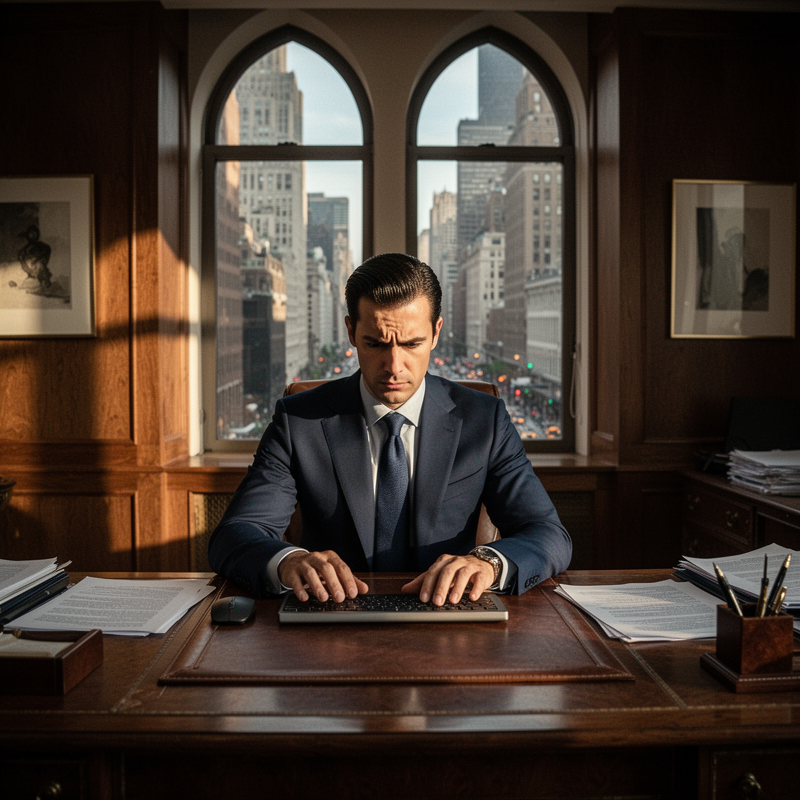
The faint hum of the Midtown Manhattan traffic was the only sound in Julian De Witt’s office. Sunlight, filtered through the high, arched windows, cast long, elegant shadows across his meticulously organized mahogany desk. Twenty-one days had passed since the divorce papers with Victoria were signed, sealed, and delivered. He had thought the worst of it was over, a quiet, if painful, chapter closed.
His phone, resting silently on a leather blotter, suddenly vibrated. Then again. And again. A rapid-fire burst of notifications lit up the screen, each one accompanied by a subtle, insistent buzz against the wood. Julian frowned, a flicker of irritation crossing his stoic face. He rarely let his personal device interrupt his work, especially not during the calm of a late afternoon.
He reached for it, his fingers brushing the cool glass. The screen pulsed with the red and black logo of Page Six, followed by a torrent of headlines. His brow furrowed deeper as he saw his own name, Victoria’s, and then, inexplicably, Lucas Finch’s.
His thumb moved, almost automatically, tapping the first notification. The image that filled the screen hit him like a physical blow.
It was Victoria. Outside the iconic, old-money facade of the Carlyle Hotel. Her head was tilted back, eyes closed, a smile plastered across her face. And pressed against her, kissing her with an undeniable intensity, was Lucas Finch.
Lucas. Julian’s stomach clenched. The 24-year-old protégé he had personally handpicked three years ago, brought into De Witt & Gable Capital, molded, and trusted. The young man who had sat across from him at countless board meetings, nodding with an eager, almost filial respect.
His thumb moved again, scrolling through the cascade of images. Another angle, Victoria’s hand splayed across Lucas’s chest. Another, their faces alight, caught in the flash of a paparazzi lens. Each click was a fresh stab of disbelief, then a growing, icy knot of something else. Betrayal.
The notifications kept coming, an endless stream. Not just Page Six now, but TMZ, The Daily Mail, every gossip blog and society column worth its salt. The narrative was already taking shape, coalescing into a venomous, predictable tale.
“Julian De Witt’s Ex-Wife Finds Youthful Vigor with Protégé,” one headline screamed, overlaid on a split image of Lucas and Victoria, juxtaposed with an unflattering, slightly blurred photo of Julian himself from an old charity gala.
Another read: “From Mentor to Muted: De Witt Left Behind as Young Love Blooms.”
He didn’t need to read the articles. He knew the drill. The subtle digs, the insinuations, the carefully chosen adjectives painting him as the aging, bitter ex-husband, a relic of a bygone era. Lucas, the vibrant, passionate newcomer, sweeping Victoria off her feet.
A cold wave washed over him, bypassing the initial shock and anger. This wasn’t just gossip. This was a demolition. A calculated, precise strike.
His phone buzzed again, this time with a text from Harrison Gable, his senior partner. “Julian, are you seeing this? Call me immediately.”
He ignored it. His gaze was fixed on the Page Six article, not on the words, but on the precise timestamp below the photo: ‘Published 4:17 PM EST.’
He pulled up the digital version of his marital trust agreement on his desktop, his fingers flying across the keyboard. He navigated through the dense legalese, his eyes scanning for a specific section, a particular clause he had almost forgotten in the maelstrom of his grief over Clara’s death eight months prior.
There it was. Article 17.3, subsection B: “Should either party engage in a publicly documented romantic relationship with an individual previously employed by, or under the direct mentorship of, De Witt & Gable Capital LLC, within ninety days of the finalization of this divorce decree, then all remaining trust assets held by said party shall be liquidated at current market value.”
Victoria had a substantial portfolio of De Witt & Gable stock, part of her settlement, held in that trust. Its value was locked. Until now.
He reread the words, the precise wording burning into his mind. “Publicly documented romantic relationship.” “Within ninety days.”
Twenty-one days. Lucas Finch. The Carlyle.
The room, moments ago so calm, suddenly felt airless. A suffocating pressure built in his chest. His divorce from Victoria had been final for exactly three weeks. The photo had been published mere minutes ago, but already, the tabloid coverage was surging, the impressions multiplying at an impossible rate.
He clicked refresh on the Page Six article. The view counter, a small, digital tally at the bottom of the screen, was ticking upward in real-time. 4.2 million. 4.3 million. 4.4 million.
The numbers climbed, relentless. Each impression was a tiny, invisible wrench, turning a mechanism he had helped build. He closed his eyes, a grim realization settling over him with the weight of cold steel.
The photo wasn’t just a public humiliation. It was a trigger.
Part 2
The photo wasn’t just a public humiliation. It was a trigger.
Julian stared at the screen, the relentless upward march of the view counter a digital heartbeat of his undoing. He couldn’t stay in the office. The air felt thin, suffocating. He needed to be home, to think, to process the cold, strategic precision of Lucas’s move.
He arrived at his Upper East Side townhouse late that evening, the city lights a blur outside his car window. The silence inside was heavy, a stark contrast to the digital noise that had barraged him all afternoon. He hadn’t even had time to take off his coat when the doorbell chimed.
It was Beatrice. His older sister, her expression grim, holding a thick leather portfolio. She didn’t offer a greeting, just walked past him into the living room, setting the portfolio on the coffee table.
“I’ve been tracking this since the moment Clara’s will was read,” she stated, her voice low and direct. She opened the portfolio, revealing stacks of printed financial statements. “The trust liquidated an hour ago. Exactly as Article 17.3 subsection B dictated.”
She pushed a document across the table. It was a transfer confirmation. The amount jumped out at him, stark and undeniable: $14.5 million. His trust stock, Victoria’s portion, now converted to liquid cash.
“That’s not the worst of it, Julian,” Beatrice continued, her gaze unwavering. “Lucas didn’t just stumble into Victoria’s orbit. This was orchestrated. He paid your former executive assistant, Sarah, to get the estate planning files.”
Julian felt a fresh wave of nausea. Sarah. She had worked for him for years, a quiet, dependable presence. He had even sent her flowers after Clara’s funeral.
“When?” he managed, his voice a strained whisper.
“During Clara’s funeral weekend,” Beatrice revealed, her eyes hardening. “Eighty-five thousand dollars wired to an untraceable offshore account. Sarah thought she was being smart, erasing her tracks, but I found the ledger entries. He needed the specifics of your marital trust, Julian. The exact clauses. The precise timing.”
He reeled, the pieces clicking into place with sickening clarity. Not just a betrayal, but a calculated, clinical assault, planned while he was mourning his sister, while Clara was still in the ground.
As Julian tried to absorb the depth of Lucas’s treachery, his phone vibrated again, a sharp, insistent ring on the polished wood of the coffee table. He looked down. It was Harrison Gable.
He picked it up, pressing it to his ear. Harrison’s voice, usually calm and measured, was tight with urgency. “Julian, the board is in a panic. This scandal… it’s causing massive instability. I need your immediate resignation from the fund board.”
CHAPTER 2: The Nevis Shell Company
Victoria swirled a flute of champagne, the bubbles catching the low light of the Soho private members club. Lucas Finch sat across from her, his smile easy, his eyes never quite still. He spoke of their future, of “our” international design firm, a vision he painted with vivid, confident strokes.
“Imagine it, Victoria,” he said, leaning forward. “A global brand. Your impeccable taste, my financial acumen. We’ll be unstoppable.”
He reached across the polished table, covering her hand. “This is our fresh start, a clean slate, away from all that old money baggage.”
Victoria’s chest tightened with a familiar flutter. He made her feel vibrant, seen, unlike Julian, who had receded into his grief eight months ago, leaving her alone in cavernous rooms.
“It sounds wonderful, Lucas. Truly.” She squeezed his hand back. “I’ve just wired the remaining $3.2 million from the divorce settlement. It should clear by morning.”
Lucas’s smile broadened, a flash of pure satisfaction in his eyes. He lifted his glass. “To our future, then. To Apex Holdings.”
Victoria raised her own glass, feeling a thrill. She didn’t know that Apex Holdings was a shell company, registered just last week in Nevis, using his mother’s obscure maiden name. She didn’t know the accounts linked to it were solely under Lucas’s control, not theirs. She simply believed his grand promises, every word a balm to her bruised ego.
She drank, oblivious, as her financial independence flowed directly into his hidden, untraceable channels.
CHAPTER 3: Premeditated Papers
Serena Lang, the crisis PR consultant, walked into my office without preamble, her heels sharp against the marble floor. She carried a tablet and a tightly bound stack of printouts.
“Julian,” she began, her voice clipped, “this isn’t good. Not just the Carlyle photos.”
She tapped the tablet screen, turning it to face me. “This is a public relations server. Anonymous upload, four months ago. Look at the date.”
My eyes scanned the header: April 12th. Eight months ago. The image on the screen displayed a press packet, meticulously drafted, detailing my alleged emotional instability, my “unpredictable behavior” following Clara’s illness.
“This outlines a complete breakdown,” Serena continued, her finger tracing the text. “Psychological assessments, quotes about my ‘unsuitability’ for the firm.”
A cold dread seeped into my bones. April 12th. I remembered that date.
It was the night I’d finally given in to Clara’s nurse, collapsing onto a cot in her hospice room. The fluorescent lights humming, the sterile smell, the quiet beeps of machines. My sister, sleeping, her hand in mine.
Lucas had been preparing this smear campaign while I was barely sleeping, while I was watching Clara slip away.
“They had this ready,” I murmured, the words tasting like ash. “Waiting for the right moment.”
Serena nodded, her expression grim. “They’ve been building a narrative, a very specific one, long before any divorce was final, long before the Carlyle.”
“We need to respond, Julian,” she urged. “A public statement. Deny everything.”
I shook my head, my jaw tight. “No. Not yet. This isn’t about public perception. This is about what’s real. Get legal to verify every single one of these documents. Every date. Every server log.”
Silence stretched between us, thick with the weight of Lucas’s calculated cruelty.
CHAPTER 4: The Fraudulent Credentials
Beatrice’s voice on the phone was typically brisk, but I could hear an edge of satisfaction. “I’m in Boston, Julian. Just left the educational verification agency.”
“And?” I prompted, leaning back in my office chair. The city hummed outside my window, a stark contrast to the quiet tension in my gut.
“Remember Lucas’s Ivy League background? Dartmouth, finance major?”
“Of course,” I said. “He spoke of it constantly. His whole pitch was built on it.”
“It’s a complete fabrication,” Beatrice announced. Her words landed like a blow. “He never set foot on that campus as a student.”
I felt a sudden, sharp betrayal. Lucas, the brilliant, driven young man I’d personally mentored, had built his entire persona on a lie.
“He paid twelve thousand dollars,” she explained, “to an offshore credential consultancy. They fabricated his entire academic transcript, every grade, every extracurricular. Even a fake graduation date.”
My stomach clenched. “Twelve thousand? Just to get in the door?”
“It gets better,” Beatrice said, ignoring my shock. “I have sworn affidavits from two university registrars confirming his records are entirely fraudulent. No enrollment, no degrees, nothing.”
The phone felt heavy in my hand. He hadn’t just faked a diploma. He’d lived a complete, detailed lie for three years right under my nose. All the late-night talks about his “student struggles,” his “ambition to prove himself” – every word now felt like a carefully rehearsed performance.
“So he’s not just a liar about the money,” I said, a bitter taste in my mouth. “He’s a liar about who he is.”
CHAPTER 5: The 2:15 AM Proxy
Harrison Gable, his face a mask of carefully controlled concern, called an emergency board meeting. The conference room at De Witt & Gable Capital felt unusually cold, the air thick with unspoken judgment. I sat opposite him, Lucas on my right, radiating an infuriating calm.
Harrison cleared his throat. “Partners, we’ve convened to address the recent, shall we say, instability. Julian, this document was presented to us yesterday.”
He slid a single sheet of paper across the polished mahogany table toward me. It was a proxy transfer document, elegantly typed, stating that I, Julian De Witt, irrevocably surrendered my corporate voting rights to Lucas Finch.
My heart hammered against my ribs. My signature was there, a flowing script I knew intimately, yet it felt alien, wrong.
“It bears your signature, Julian,” Harrison said, his gaze unwavering. “And a legal notary stamp.”
I leaned closer, my fingers tracing the embossed seal. The date was August 14th. The time stamp: 2:15 AM.
A sharp, disorienting memory hit me, a flash of white lights and muffled voices. August 14th. My mind scrambled, trying to piece it together.
“This is impossible,” I stated, my voice low but firm. “I did not sign this document. Not at 2:15 in the morning. Not ever.”
Lucas shifted subtly beside me, a barely perceptible movement. His expression remained neutral, almost bored.
Harrison raised an eyebrow. “The notary stamp appears legitimate. Are you claiming forgery, Julian?”
I looked at my name, etched onto the paper, a betrayal in black ink. “I’m claiming I was completely incapacitated on that exact night. Physically unable to sign anything.”
The partners around the table exchanged uneasy glances. Lucas remained still, a shadow of a smile playing on his lips.
CHAPTER 6: Emergency Room Admission
Beatrice arrived at my lawyer’s office, not with a briefcase, but a slim, sealed manila envelope. The room was hushed, the blinds drawn against the harsh afternoon light. My attorney, Mr. Thompson, motioned for her to sit.
“I have something that will clarify Julian’s whereabouts on August 14th,” she stated, her voice steady.
She placed the envelope on the desk. “Certified file from Mount Sinai Hospital.”
Thompson’s eyes widened slightly as he pulled out a stack of official-looking documents. They were medical admission records, detailed and precise.
He read aloud, his voice dropping slightly with each line. “‘Patient Julian De Witt admitted to Emergency Room, August 14th, 1:40 AM. Severe medical complications. Administered intravenous sedatives. Chemically sedated until approximately 8:00 AM.’”
A wave of relief, cold and sharp, washed over me. The memory of the white lights, the blurry faces, solidified into concrete proof. My body had been there, fighting for me, even when my mind couldn’t.
“This explicitly states,” Thompson continued, tapping a line with his finger, “that Mr. De Witt was physically unconscious and incapable of performing any legal action, including signing documents, at 2:15 AM on August 14th.”
Attached was a signed, formal verification. Dr. Leonard Glass, Chief of Emergency Medicine, Mount Sinai Hospital. His signature, clear and unwavering, confirmed my physical state.
“Lucas couldn’t have gotten my signature,” I said, the words a raw realization. “Not then. Not ever.”
Thompson looked up, a glint of determination in his eyes. “This changes everything, Julian. This isn’t just a claim; this is irrefutable medical evidence.”
CHAPTER 7: The Aunt’s Stamp
“The notary,” Beatrice said, her voice tight with a fresh wave of disgust. We were back in my office, the Mount Sinai records spread across the desk like a shield. “I put my PI on it.”
“And?” I prompted, bracing myself. Every detail of this conspiracy was uglier than the last.
“The notary public who stamped that proxy document,” she revealed, her eyes narrowing, “is Evelyn Finch’s sister. Lucas’s maternal aunt.”
My jaw clenched. Evelyn Finch. Lucas’s mother. The old bank teller. The connection clicked into place, a sick, perfect fit. Lucas had family inside. His own blood had helped him commit this fraud.
“His aunt?” I repeated, the incredulity in my voice. “She signed off on that?”
Beatrice pushed a stack of papers toward me. “Private investigator records. Her name is Patricia Olsen. She was a registered notary in Manhattan for years.”
Then she slid another document. “Flight manifests. One-way ticket to Miami. Booked three days after your divorce was finalized, Julian. She boarded a flight last Tuesday.”
“So she fled,” I stated, a bitter laugh escaping me. “As soon as the heat was on.”
“Fled, yes,” Beatrice confirmed. “But not without a trace. My PI tracked her to a waterfront condo. South Beach. Cash purchase, just last week. Quite a tidy sum for a former notary public.”
The image of Lucas’s calm, confident face in the board meeting flashed in my mind. He hadn’t just orchestrated a complex financial coup; he’d involved his own family, dragging them into the criminal act. The scope of his ruthlessness expanded with every new piece of information.
“She knew what she was doing,” I said, looking at the flight manifest. “And Lucas paid her well for it.”
CHAPTER 8: Auction House Consignments
Victoria walked into the charity gala, head held high, a vision in emerald green silk. She paused, reaching up to clasp her grandmother’s diamond brooch to the fabric. Her fingers met empty air.
Her perfectly manicured hand flew to her chest, then down to her purse. She’d put the antique piece in her personal vault this morning, a safe at her Manhattan townhouse. A gift from Julian’s mother, a family heirloom she had insisted on keeping through the divorce.
A cold certainty settled in her stomach. Something was wrong.
She excused herself from her new circle of admirers, slipping away to a discreet corner to make a call. The vault, she was told by her estate manager, was empty. Not just the brooch, but her grandfather’s watch, the sapphire necklace, a pair of pearl earrings that had belonged to her great-aunt. All gone.
A frantic, discreet inquiry to a contact at a Zurich auction house confirmed her worst fears. They’d recently handled a private consignment. Not in her name, but under a string of shell names, straw buyers. The descriptions of the pieces were unmistakable.
“The proceeds,” her contact whispered over the line, “totaled 1.8 million US dollars, Victoria.”
Victoria’s hand, still clutching her phone, trembled. Lucas. It could only be Lucas. He had access to everything in her townhouse. He had been “helping” her reorganize her assets, consolidate.
A wave of nausea washed over her. She saw him in her mind’s eye, smiling, promising “their future,” while systematically, expertly, he had been stripping her of her inheritance. The joint design firm, the grand dreams – they were all just a cover. She wasn’t his partner. She was his next asset to be liquidated.
CHAPTER 9: The Wall Street Journal Leak
Beatrice ignored the phone calls from Serena Lang, my crisis PR consultant, who was still trying to manage a “balanced” media strategy. Beatrice had her own plan.
She walked directly into the offices of the Wall Street Journal, bypassing junior reporters, and requested to speak with Sarah Chen, a veteran financial journalist known for her unwavering integrity and deep connections in the city’s institutional investment circles.
Beatrice laid out the certified Mount Sinai ER logs, the notary public’s flight manifest, the fabricated Dartmouth credentials. She presented a meticulously documented timeline of Lucas Finch’s actions, from the day Clara entered hospice to the wiring of Victoria’s divorce settlement.
The next morning, the financial world awoke to a front-page exposé. “Protégé’s Proxy Play: Forged Signatures and Offshore Schemes Rock De Witt & Gable.” The article detailed my critical medical emergency on August 14th, the fraudulent proxy, and Lucas’s direct family involvement.
The fallout was immediate and brutal.
My phone, previously alight with accusatory messages, now buzzed with calls from Harrison Gable and other senior partners. Institutional investors, rattled by the public exposure of fraud, initiated capital withdrawals.
Within three hours of the article’s publication, the numbers flashed across the De Witt & Gable internal dashboard: $110 million. Pulled from Lucas’s nascent fund, almost instantly. The quiet, icy withdrawal of trust had begun.
Lucas, so confident just days before, was bleeding money, his reputation in tatters.
CHAPTER 10: Retaliation in Audio
Lucas didn’t go down quietly. The Wall Street Journal exposé had hit him hard, cutting off his capital flow, but it also provoked a desperate, calculated counterattack.
My phone rang, a rapid series of notifications. Not a new article, but sound files. Anonymous leaks, distributed to a dozen tabloid sites simultaneously.
I clicked on the first one. My own voice, muffled, weary. “This board… they’re like a flock of incompetent vultures.”
Another file. “I just want this to be over. All of it. The firm, the expectations, the endless circling.”
The voice memos were heavily edited, spliced together from private conversations I’d had with Clara during her final weeks, moments of raw, unfiltered grief and exhaustion. Lucas had installed listening devices in my home during his time as my protégé. He had weaponized my vulnerability.
The public narrative, which had briefly tilted in my favor, now fractured again. The headlines screamed: “De Witt’s Own Words: Partner Calls Board ‘Vultures’ Amidst Firm Crisis.”
Harrison Gable called, his voice tight with barely suppressed anger. “Julian, what in God’s name are these recordings? Our stock is tanking. Volatility is through the roof.”
“They’re manipulated, Harrison,” I explained, my voice strained. “Snippets taken completely out of context, from a time I was… not myself.”
“Context won’t fix this, Julian,” he snapped. “The market sees what it hears. We have a serious problem.”
Lucas had used my grief, once again, to twist the knife. He was fighting back, and he was willing to burn everything down to do it.
CHAPTER 11: The Encrypted Drive
The air in Central Park was damp and cool, the city lights a distant glow through the trees. Victoria’s face was pale, almost translucent, in the dim light of her phone screen. She clutched a small, silver flash drive in her gloved hand.
“He took everything, Julian,” she whispered, her voice barely audible. “My grandmother’s brooch. The sapphire necklace. Two million dollars, just gone.”
Her eyes, usually so focused on external validation, now held a raw, exposed fear. “He made me feel… stupid. Used.”
Beatrice stood quietly beside me, her expression unreadable. She had agreed to this midnight meeting, a silent truce in the ongoing war.
Victoria took a shaky breath. “I have something. Everything. His personal banking passwords. His offshore accounts. Ledgers for Apex Holdings.” She thrust the drive toward Beatrice. “It’s all encrypted, but I have the keys.”
Beatrice took the drive, her fingers brushing Victoria’s. “What do you want, Victoria?” she asked, her voice direct.
“Immunity,” Victoria choked out. “I want a legal release. No family claims against my remaining personal accounts. I want to be able to leave this city with what little I have left.”
Beatrice produced a pre-drafted document, crisp and white against the park’s darkness. She unfolded it, revealing a signed legal release. It stated that the De Witt family would waive any future claims regarding Victoria’s remaining assets, provided her information proved useful.
Victoria’s eyes scanned the document quickly, then she nodded. “It’s all on there. He has an account in St. Kitts. He was wiring money just last week.”
She turned, her silhouette blurring into the deeper shadows of the park, leaving us with the encrypted drive and the cold weight of her betrayal, now turned against her betrayer.
CHAPTER 12: Board Room Freeze
Harrison Gable’s face was grim as he surveyed the assembled partners. The long table, usually a place of quiet deliberation, now felt like a battleground. Lucas sat stiffly, his usual composure fractured by a flicker of fear in his eyes.
“Based on the irrefutable medical evidence from Mount Sinai Hospital,” Harrison began, his voice resonating through the room, “and supplementary financial ledgers provided by Mrs. De Witt…”
He paused, letting the implication hang in the air. “The board has no choice but to immediately suspend Lucas Finch’s corporate voting authority and partnership at De Witt & Gable Capital.”
A ripple went through the room. Lucas’s face, usually so composed, went pale.
“Furthermore,” Harrison continued, “our legal counsel is moving to freeze all of Mr. Finch’s firm-related assets, pending a full investigation into fraud and embezzlement.”
The firm’s lead counsel, Mr. Davies, stepped forward, already on a phone call. He spoke in low, urgent tones.
Minutes passed, tense and quiet. Then Davies hung up, his expression a mixture of disbelief and frustration.
“Mr. Gable,” he announced, his voice tight. “Corporate compliance has just informed me… we are too late.”
My blood ran cold.
“Mr. Finch,” Davies turned to Lucas, his voice accusatory, “wired eight million dollars to an un-indexed account in St. Kitts. Four hours ago. Just prior to this meeting.”
Lucas, despite his evident panic, managed a defiant, almost feral grin. He had anticipated their move. He had taken his millions and vanished them into the digital ether, slipping through their fingers just moments before the trap snapped shut.
CHAPTER 13: Clara’s Final Entry
Days blurred into a focused campaign to unravel Lucas’s remaining schemes. I was in Clara’s old apartment, now being meticulously cataloged by a professional estate manager. The scent of her favorite jasmine tea still seemed to linger in the air.
I picked up a worn leather journal from her bedside table. It was locked, secured with a small, tarnished silver clasp. Clara had always kept her thoughts private.
“Do you want me to put that aside, Mr. De Witt?” the estate manager asked, her voice soft.
“No,” I replied, my fingers fumbling with the clasp. A hidden spring released, and the book opened with a soft sigh. Clara’s elegant script filled the pages, entries from her final months.
I skipped through the early entries, looking for anything related to Lucas, to the firm. Then, three weeks before her death, a date leaped out at me: July 20th.
Her entry read: “Lucas seems… distracted. I’ve noticed several odd discrepancies in the family foundation accounts. Small transfers, unusual beneficiaries. Nothing blatant, but enough to raise an eyebrow.”
My breath hitched. Clara had known.
“I spoke to Lucas about it today,” another line read. “He was dismissive, almost annoyed. Said it was ‘legacy paperwork.’ But I can’t shake this feeling. I told him I’m starting an audit next week.”
Tears blurred my vision. Clara, so frail, so ill, yet still watchful, still protecting the family. She had confronted him. She had tried to stop him.
“Julian, he’s not who you think he is,” another entry, scribbled just days before her passing. “Be careful. Don’t let him hurt you.”
The journal slipped from my grasp. She had tried to warn me. She had been fighting him, silently, desperately, even as her own life faded. And I, consumed by my grief, by the illusion of his loyalty, had missed it all.
CHAPTER 14: Closing Doors
Federal investigators launched preliminary inquiries into Lucas’s trading activities, but the process was slow, hampered by international jurisdictional boundaries. His St. Kitts account was proving difficult to trace, protected by layers of banking secrecy.
Life in Manhattan, however, moved with its own quiet, powerful currents.
Lucas walked into The Grill, his favorite Midtown steakhouse, for lunch. He’d made a reservation online, as always, expecting his usual corner booth, the discreet nod from the maître d’.
The maître d’, Mr. Petrov, a man whose smile usually stretched wide for Lucas, now offered only a flat, polite expression. “Mr. Finch.”
“My reservation,” Lucas began, trying to project his usual confidence. “For one, under Finch.”
Petrov consulted his tablet, then looked up, his gaze cool. “I’m afraid, Mr. Finch, your reservation has been permanently canceled.”
Lucas felt a prickle of unease. “Canceled? Why? There must be a mistake.”
“No mistake, sir,” Petrov replied, his voice devoid of warmth. “And your membership to The Grill has also been revoked. Effective immediately.”
Lucas opened his mouth to protest, but Petrov merely inclined his head. “We apologize for the inconvenience, but we are unable to serve you. Please leave.”
The words were spoken softly, yet they resonated with the force of an ultimatum. No raised voices, no public scene. Just the quiet, immovable wall of a door closing. Lucas stood frozen for a moment, the hushed murmur of the lunch crowd suddenly feeling like a judgment. He turned and walked out, the steakhouse’s heavy brass door swinging shut behind him.
CHAPTER 15: The Unspoken Shift
Over the next three months, no dramatic courtroom battles unfolded. There were no public condemnations, no viral headlines beyond the initial Wall Street Journal exposé. Instead, Manhattan’s elite moved with a silent, almost invisible precision.
High-society hostesses quietly dropped Lucas from guest lists. Invitations to exclusive galas, art auctions, and Hamptons weekends simply stopped arriving. His phone, once buzzing with calls from social climbers and eager investors, fell silent.
Real estate brokers, who had once vied for his business, now politely declined his leasing applications for prime commercial spaces. Banking executives, once eager to take his calls, suddenly had full schedules and “unforeseen conflicts.”
Lucas Finch, once the city’s golden boy, was simply… erased.
Meanwhile, Victoria, after receiving the certified legal release from Beatrice, quietly liquidated her remaining assets. She packed two suitcases. One evening, under the cloak of twilight, she departed New York. Her Manhattan townhouse, once a symbol of her ambition and a target for Lucas, now stood empty, its windows reflecting the fading light.
She was on an evening flight to London, a city where she hoped to restart, far from the echoes of Lucas’s betrayal and the De Witt family’s quiet power. The city had simply exhaled, and Lucas, along with his enabler, had been swept away.
CHAPTER 16: The Wall of Silence
Lucas Finch walked onto the executive floor of De Witt & Gable Capital. He bypassed the reception, his footsteps echoing in the pristine silence of the hallway. His face was set, a last-ditch effort at defiance.
He intended to demand a severance package from Harrison Gable, a final, public acknowledgment of his time, something to cling to.
He reached Harrison’s office, the door ajar. Through the opening, he could see Harrison, absorbed in paperwork. Other partners moved through the hallway, their expressions focused, their strides purposeful.
No security guards tackled him. No one shouted. No voices were raised.
A senior partner, Mr. Evans, walked past Lucas, carrying a stack of files. Their eyes met for a fraction of a second. Mr. Evans’s gaze was not angry, not sad, not even acknowledging. He simply looked through Lucas, as if he were air, a phantom occupying space.
Then another partner, then another. They moved around him, past him, in absolute, icy silence. Their faces were blank, their demeanor unperturbed. Lucas Finch was invisible.
The realization hit him with the force of a physical blow. There would be no dramatic confrontation, no final, satisfying argument. There was just this. This absolute, terrifying wall of silence. His social capital in New York finance was permanently dead. His reputation, erased. His very presence, nullified.
He stood there for a long moment, the quiet hum of the building mocking his existence. Then, without a word, he turned and walked out of the office, his back ramrod straight, into the echoing silence of the Manhattan elite.
CHAPTER 17: The Offshore Ghost
Federal attorneys confirmed it, their voices devoid of triumph. “Mr. De Witt, Lucas Finch has been thoroughly blacklisted across all US financial markets. No major institution will touch him. No reputable firm will hire him. His name is essentially poison.”
A cold comfort, I thought. Reputation was one thing; justice was another.
“However,” the attorney continued, “the eight million dollars in Nevis. We’ve hit a wall. Nevis banking secrecy laws are ironclad. Without a direct trail from a US-based criminal activity to that specific account, federal authorities lack immediate jurisdiction to compel disclosure or initiate recovery.”
The money was gone. Lucas was gone.
A few days later, a brief, anonymous tip reached my desk: Lucas Finch had boarded a private jet at JFK airport. Destination: Dubai. Passport: foreign, untraceable to his past identity. He had found a new life, a luxurious exile, funded by my family’s stolen wealth.
My firm control of De Witt & Gable Capital was fully restored. My sister’s legacy was secure. But the image of Lucas, free and wealthy, a ghost in the financial ether, lingered. He was out there, an unresolved threat, a shadow that stretched across the ocean. The battle was won, but the war, I knew, was not entirely over.
CHAPTER 18: Unmarked Platform
A long time later, I stood on a crowded, noisy Lexington Avenue subway platform during a damp Tuesday morning commute. Rain slicked the pavement outside, and the air in the station was thick with the smell of wet wool and stale coffee. Thousands of oblivious commuters streamed past, their faces a blur of everyday urgency.
I pulled out my phone, checking the news feed. A brief item, tucked away on a financial blog: “Anonymous Investment Firm Initiates Hostile Short Position Against De Witt & Gable Subsidiary.”
No names were mentioned. No specific details, just a faint tremor in the market, a familiar ripple of aggression. It could be anyone. It could be nothing.
But a prickle of recognition, cold and sharp, traced its way down my spine. The ghost.
I pocketed my phone, the screen dark. The train rumbled into the station, its screech echoing in the cavernous space. I stepped onto the crowded car, jostled by the morning rush, surrounded by thousands of lives utterly disconnected from my own.
He was out there, somewhere. Forever watchful.
In our world, they never lock the door in your face; they simply stop answering when you knock.
Leave a Reply