
Ranvir Singh Told to Quit Good Morning Britain After Emotional Speech on Far-Right March

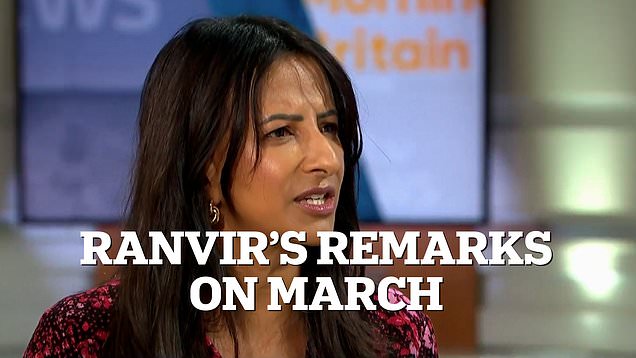
Ranvir Singh, the popular presenter on “Good Morning Britain,” has been at the center of controversy following an emotional speech she delivered regarding a far-right march that took place in London. Singh’s candid remarks about the societal anxieties surrounding the march have prompted a backlash from some viewers who are now calling for her resignation from the show.

During a recent episode, Singh shared her personal reflections on the atmosphere of fear and concern that has become prevalent due to rising far-right sentiments. She recounted a distressing encounter with a protestor who voiced fears about illegal immigration, illustrating how such political events can deeply affect individuals’ daily lives. This poignant commentary painted a picture of the political unrest affecting ordinary citizens navigating their routines amidst these tense public displays.
The Backlash and Mixed Reactions to Singh’s Comments

Singh’s remarks sparked a range of responses among viewers, where reactions were particularly divided. Approximately half of the feedback was supportive, with many appreciating her honesty and the emotional depth of her analysis. Conversely, the other half consisted of critical messages from those suggesting that she should step down from her role as a presenter. This mixed reception highlights the polarized views surrounding the discussion of race and migration in contemporary society.

Singh articulated that the complexity of the protest extended beyond simple labels of racism. Many participants, she suggested, might not align with extremist beliefs but rather express frustration over more complex societal issues. This sentiment is vital in understanding the broader context of public demonstrations that often evoke strong criticisms and emotions.
The Impact of the March and Broader Societal Implications

The far-right march, led by notable activist Tommy Robinson, attracted between 110,000 and 150,000 participants, far exceeding anticipated numbers. Meanwhile, counter-protests organized by anti-racism advocates garnered roughly 5,000 attendees. Singh noted that the sheer scale of such events underlines the urgent need to engage in meaningful dialogue about race and migration. This situation presents an opportunity to explore the roots of public sentiment and the fears that drive large-scale protests, regardless of their ideological underpinnings.

During her emotional address, Singh emphasized the importance of approaching these topics with sensitivity and an open mind. She cautioned against hastily labeling all participants in the far-right march as racists, suggesting that doing so could overlook the valid concerns that lead individuals to join such demonstrations. In her view, it is crucial to foster conversations that delve into the various motivations behind people’s involvement in these rallies and to create a space for understanding. By addressing the fears and frustrations of those who feel marginalized by current immigration policies and social changes, society can engage in a more constructive discourse.
Navigating Difficult Conversations in Today’s Climate

Through her impassioned speech, Singh highlighted the essential need for society to engage in difficult conversations surrounding race, migration, and freedom of speech. In an era where these discussions can ignite fierce debates, she advocates for a balanced approach that allows differing perspectives to be heard and understood. While acknowledging the fears stemming from far-right ideologies, Singh stressed the value of recognizing the diversity of thought present among individuals participating in such marches.

In navigating the complexities of public opinion, it becomes imperative to approach these conversations with empathy and an understanding of the emotions involved. Singh’s call for broader dialogue serves as a reminder that discussing issues related to race and migration is not merely about identifying right and wrong; it’s about understanding human experiences and the underlying factors that fuel tensions in today’s society.
Conclusion

As the conversation continues to evolve, it remains vital for media personalities and social commentators like Ranvir Singh to voice their thoughts candidly. While her emotional commentary has stirred controversy, it also exemplifies the critical nature of addressing social issues head-on. For viewers wanting to engage further in this dialogue, joining discussions and staying informed will play a key role in shaping a more nuanced understanding of race and migration in our time.





Leave a Reply