CHAPTER 1: The Mark on the Blotter
Part 1
Four years ago, my ex-fiancé and legal partner Julian told me my grandfather had sold his $42 million corporate share and moved overseas.
Yesterday, during a confidential audit at our firm’s estate archive, I overheard Julian’s real estate appraiser whisper that the old man was getting too weak to sign weekly corporate consent forms.
I sprinted to the property’s locked stone outbuilding and forced open the heavy cellar door.
Inside, sitting on a rusted folding chair beside stacks of forged voting deeds, was my grandfather Arthur, frail and shivering in captivity.
Before I could get him to safety, Julian had security remove me from the property and filed an emergency order revoking my legal license.
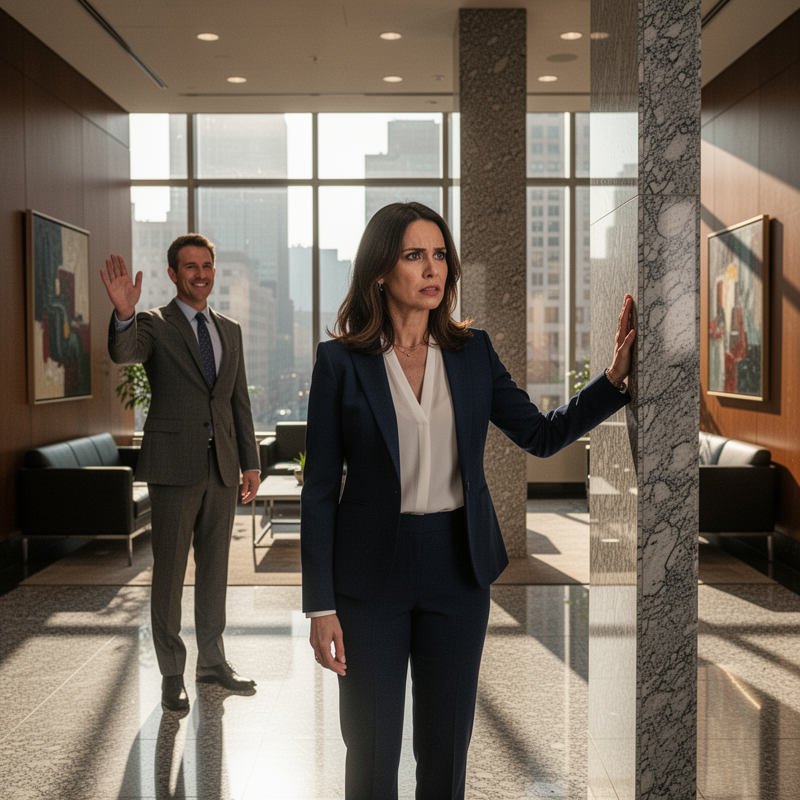
The polished granite floors of Croft & Ellison Law reflected the morning light, stark and unforgiving. Each step Maya Ellison took echoed in the cavernous lobby, a sound that felt both familiar and alien after four years away.
She had built this firm with Julian Croft, her fiancé at the time, but the air now felt thick with unspoken history.
Julian’s corner office was exactly as she remembered it: floor-to-ceiling windows overlooking the Manhattan skyline, a sprawling mahogany desk, and the scent of expensive leather and ambition.
He stood to greet her, a smooth, practiced smile on his face. His tailored suit seemed to fit him even better than before, if that were possible.
“Maya. What an unexpected pleasure,” Julian said, extending a hand that felt oddly cold.
His eyes, however, held a flicker of something she couldn’t quite place – surprise, perhaps, quickly masked.
“Julian,” she replied, her voice steady. “I’m here about my grandfather, Arthur. I was hoping you could tell me how he’s settling into his retirement.”
She watched his face carefully, searching for any tell.
Julian gestured to a plush leather armchair opposite his desk.
“Of course. Please, sit. Arthur is doing wonderfully, absolutely wonderfully. Florida suits him.”
He leaned back in his chair, fingers steepled.
“He signed over his remaining $42 million voting shares a few years back, decided he was ready for the quiet life. Couldn’t blame him, honestly. He earned it.”
Maya’s jaw tightened imperceptibly. Arthur Ellison, a man whose life was synonymous with work, who lived and breathed Ellison Properties, would never simply “retire” to Florida without a word. Not to her.
“Right,” Maya said, a skeptical note she hoped was imperceptible in her tone. “I’d love to see the paperwork, just for my peace of mind. The original transfer documents.”
Julian chuckled, a low, easy sound that grated on her nerves.
“Maya, you know how these things are. All filed away. Confidential client matters, even if it’s family. Besides, Arthur made it clear he wanted a clean break. No fuss.”
He waved a dismissive hand towards a stack of neatly organized files on his desk, as if they were inconsequential.
“Unless, of course, you’re implying something nefarious?” His smile tightened, a hint of steel entering his voice.
“Not at all,” Maya quickly responded. “Just… due diligence. I’m sure you understand. I could just take a quick glance at the summary, if you have it handy.”
She kept her gaze fixed on the files, a flicker of an idea sparking in her mind. Her unique forensic skills, honed over years of examining document authenticity, often picked up details others missed.
“Fine, fine.” Julian sighed, feigning exasperation. “Just the top one, then. Marcus Dunbar just finished reviewing the quarterly reports for the offshore assets. Pretty standard stuff, but it’ll give you a sense.”
He pushed a thick, bound report across his polished mahogany desk. Maya leaned forward, not to read the report, but to subtly scan the surface of the desk itself.
Her eyes drifted past the gleaming pen holder, the framed photograph of Julian receiving an award, to the wide, dark leather blotter that occupied a significant portion of the desk space. It was a rich, almost black leather, meticulously maintained.
Her gaze caught on a faint, almost invisible sheen. Not fresh, not wet, but a distinct residue.
It was dry fountain pen ink. A deep, sapphire blue, barely visible against the dark leather.
Her heart began to pound a little faster. Julian used rollerball pens, always. She knew his habits. This was not his ink.
Leaning in slightly under the guise of examining the report, Maya angled her head to catch the light just so. Her eyes narrowed, focusing on the microscopic details of the blotter.
There, subtly etched into the soft leather, were the ghost-like imprints of a signature. Not a simple indentation from a single press, but a series of faint, complex grooves.
Her breath hitched. She knew those marks. The distinctive, slightly wavering lines, the almost imperceptible tremor at the start of each capital letter, the way the loops of the ‘l’ and ‘s’ would sometimes drag. It was Arthur’s hand. Unmistakably.
Her grandfather had been here, recently. Not in Florida. Here, in this office. And he had been signing something.
The realization hit her like a physical blow. Julian had lied. Arthur hadn’t “retired.” He had been forced to sign documents, right here, on this very desk. And Julian was trying to hide it.
A cold dread spread through her. Arthur was not just in the building; he was likely still on the estate. Somewhere, hidden.
“Thank you, Julian,” Maya said, pushing the report back with a forced lightness, trying to keep her voice even. “Everything seems to be in order. I appreciate you taking the time.”
She stood up slowly, her mind racing. She needed to get out, now, before Julian noticed the change in her demeanor. Before he realized she knew.
“My pleasure, Maya,” Julian replied, his smile returning to full wattage. “It was good to see you. Do let me know if you decide to come back to the firm, even part-time. We could always use your talents.”
He made it sound like an invitation, but to Maya, it felt like a trap.
She gave a small, noncommittal nod, already turning towards the door. She had to locate the estate’s detached archive outbuilding. If Arthur was still here, that was where Julian would keep him, away from prying eyes.
Stepping out of Julian’s office, Maya walked calmly through the outer suite, past the assistants typing diligently at their computers, and made her way to the elevator. Her heart hammered against her ribs, a frantic drumbeat demanding urgency.
She pressed the ground floor button, her gaze fixed on the closing doors. As soon as they shut, she practically sprinted across the ornate lobby and out into the crisp morning air of the estate grounds.
The sprawling Croft & Ellison estate was a mixture of manicured lawns and historic stone buildings. The main office tower, sleek and modern, gave way to older, ivy-covered structures further back.
Her destination was the oldest of these, the outbuilding that housed the firm’s historical archives – a forgotten place, rarely visited.
She kept to the less-traveled paths, hugging the shadows of ancient oak trees, her eyes darting around for any sign of movement, any indication that she was being watched. The gravel crunched softly under her designer heels, each sound amplified in the otherwise quiet morning.
The stone outbuilding rose before her, ancient and imposing, its windows small and grimy. A place where things were meant to be forgotten, not kept alive.
Her blood ran cold, a sudden, sharp certainty seizing her. Arthur was inside. She just knew it.
Approaching the heavy oak door, she saw the thick, old-fashioned padlock. It was rusty, but formidable. Julian hadn’t just moved Arthur to Florida; he had locked him away.
Part 2
I knew I couldn’t waste time trying to break that formidable lock. I circled the perimeter of the ancient stone building, my eyes scanning for any other way in. The windows were too high, too small, or barred. But then, tucked away behind an overgrown bush, I found it – a heavy, unassuming metal service door, barely visible, leading to what looked like a rear corridor. The handle was stiff, but to my shock, it wasn’t locked. Julian was meticulous, but perhaps he thought no one would ever venture to the forgotten back of the archive.
I slipped inside, the air immediately colder, smelling of dust and old paper. The corridor was dimly lit, rows of towering metal shelves filled with forgotten files disappearing into the gloom. My steps echoed, and I tried to move as silently as possible.
Then I heard it. A muffled voice, agitated, coming from deeper within the building. It wasn’t Julian. It sounded like Wayne Albright, Julian’s real estate appraiser, his voice tight with frustration. He was on the phone.
I crept closer, straining to hear. “I’m telling you, Julian, the old man’s fading fast,” Albright hissed into the phone. “He’s barely conscious enough to hold a pen now. These weekly consent forms? It’s getting impossible. We can’t keep forging his tremor like this without suspicion.”
My blood ran cold. *Weekly consent forms.* Arthur wasn’t just here; he was being systematically drained, forced to sign away his life, piece by piece. The sound led me down a narrow, descending set of stone steps, into an even darker, colder part of the building. The air grew heavy, damp.
At the bottom of the stairs, a single, heavy utility door stood before me. It was made of thick, aged wood, reinforced with iron bands, and secured with a rusted, internal latch. I scanned the immediate area. Leaning against a stack of empty crates was a short, thick crowbar, likely left by a careless maintenance worker. A surge of desperate hope, mixed with pure adrenaline, coursed through me.
I grabbed the pry bar, the cold metal heavy in my hands. With a grunt, I wedged the end into the narrow gap between the doorframe and the thick latch. I pulled, putting all my weight into it. The old wood groaned, splitting with a sharp crack that echoed sickeningly in the confined space. The latch gave way, tearing free from the frame with a violent wrench.
The door swung inward with a creak, revealing a small, frigid cellar room. The air was thick with the smell of damp earth and something else—stale, unwashed humanity. My eyes adjusted to the gloom. In the center of the concrete floor, huddled on a rusted folding chair, was a figure.
It was Arthur. My grandfather.
He was thin, his once vibrant face pale and gaunt, his shoulders shaking with a continuous, uncontrollable tremor. He wore what looked like the same rumpled suit he’d worn four years ago, now tattered and stained. Beside him, stacked haphazardly on the cold floor, were piles of corporate documents, each one bearing a variation of his distinctive signature.
Chapter 2: Shadows in the Vault
I reached for Arthur, trying to lift him from the rusted folding chair. His skin felt like tissue paper under my touch.
“Sensors,” he whispered, his voice a raspy puff of air. “Motion sensors. He watches.”
My heart hammered against my ribs. I heard it then – the distinct, heavy thud of footsteps on the stone stairs leading down. They grew louder with each breath.
The cellar door, which I had pried open moments before, now framed Julian Croft. He stood there, completely calm, not a flicker of surprise in his eyes.
Two armed estate security guards appeared behind him.
“You’re trespassing, Maya,” Julian said, his voice flat, devoid of emotion. “Felony trespass, in fact.”
He gestured to the guards.
“Escort her off the property. Immediately.”
The guards moved quickly, their presence large and unyielding. They took my arms, pulling me gently but firmly towards the stairs. I tried to look back at Arthur, but Julian stood between us.
As they guided me through the winding path towards the front gates, a black sedan waited. The driver’s side door was open.
Julian stepped forward, extending a crisp, white envelope.
“For you,” he said. “An emergency restraining order. And a notice for an expedited psychiatric evaluation.”
My hand trembled as I took the papers. His implication hung in the air: I was unhinged. The guards eased me into the back seat.
The door clicked shut, sealing me inside as the engine hummed to life. I watched Julian through the tinted window as the car pulled away, leaving Arthur behind in the chilling shadows of the vault.
Chapter 3: The Isolation Campaign
Back in my apartment, I frantically dialed. First, Sarah, my former associate. Then Mark, a senior partner. Every call went straight to voicemail. No one picked up.
My phone rang only once, for an anonymous number, before going silent.
By mid-afternoon, the story was everywhere. Legal blogs and online journals buzzed with headlines about a “distraught former partner” suffering a “severe breakdown.” They claimed I was attempting to extort my “elderly grandfather” for trust assets.
Julian’s public relations team worked fast.
I grabbed my bag, needing to confront someone, anyone, at the firm. The taxi dropped me in front of the Croft & Ellison tower, the glass façade gleaming in the afternoon sun.
I swiped my security badge at the turnstile.
It flashed red. Access Denied.
Marcus Dunbar, the firm’s senior corporate counsel, stood waiting in the lobby. His usual easy smile was gone. His posture was rigid, his eyes cold and distant.
“Maya,” he said, holding out an official-looking envelope. “The State Bar Association has suspended your license.”
He cleared his throat.
“Pending an expedited psychiatric evaluation.”
The words hit me like a physical blow. My license. My career. He offered no explanation, no comfort, just the cold delivery of a message.
Marcus watched me, waiting for a reaction, but I felt numb. He turned and walked away, back towards the elevators, leaving me standing alone in the gleaming, empty lobby.
Chapter 4: The Closed Circle
I sat in my apartment, the silence heavy around me. My phone lay on the coffee table, a dead weight. I called my long-time legal mentor, a woman who had guided me through law school and my first tough cases.
Her assistant answered.
“I’m sorry, Ms. Ellison,” she said, her voice strained. “She’s unable to take your call.”
“Is she alright?” I asked.
“She… she’s aware of the situation with the bar and the media reports.” A beat of awkward silence. “She wishes you well.”
The line went dead. Julian’s isolation campaign worked perfectly. My professional network, built over a decade, had dissolved in a day. I was an unstable liability.
Later that night, the gnawing emptiness in my stomach grew. I walked to the market downstairs, needing anything to eat.
At the checkout, the machine beeped. “Transaction Declined.”
I tried another card. Then another. All declined.
I called the bank immediately. They informed me that all my personal accounts, savings, and investments had been frozen by court order.
Marcus Dunbar had filed an ex-parte emergency freezing order, alleging my funds were “derived from disputed trust accounts.” Without any prior notice, I had no access to my own money.
I stood in the grocery aisle, surrounded by families and cheerful music, holding a small basket of food I couldn’t buy. Julian had left me with zero financial resources and no legal standing. I was utterly alone.
Chapter 5: The Whistleblower in the Dark
The apartment was dark. I sat staring at the city lights, the exhaustion a physical ache. My phone, which had been silent for days, buzzed softly.
An encrypted email from an anonymous sender. The subject line was simply, “URGENT.”
The message requested an immediate meeting at a quiet suburban diner, specific time and table number. It had to be a trap. But what choice did I have?
I arrived at the diner, slipping into the designated booth in the back. A few minutes later, a woman slid in across from me.
Chloe Bennett. Julian’s former co-managing partner. She had abruptly resigned two years ago, vanishing from the legal scene without a trace. Her face was pale, her eyes red-rimmed.
“Maya,” she choked out, tears welling. “I’m so sorry.”
She began to speak, her voice trembling. She confessed that four years ago, she had helped Julian cover up his first fraudulent property transfer. She couldn’t live with the guilt anymore.
Chloe explained how Julian used Wayne Albright, a corrupt notary, to sign off on forced document executions. Arthur, she said, was often too weak or confused to understand what he was signing.
She looked at me, her eyes pleading for understanding. “Julian would isolate Arthur, then bring Albright in. Arthur would refuse, but then Albright would just… do it. Forge the notarization.”
The pieces began to click into place. Julian hadn’t just used Arthur’s tremor for dry ink; he had a system.
Chapter 6: Keys to the Kingdom
Chloe reached into her purse and pulled out a sleek, plastic master keycard. Attached to it was a small slip of paper with a six-digit access code.
“This is for the firm’s off-site physical document archive facility,” she said, her voice hushed. “It holds all the historical corporate files.”
She pushed it across the table. “You’ll find everything there.”
Chloe leaned closer, her voice dropping to a whisper. She revealed that Wayne Albright had notarized over $18 million in fraudulent asset adjustments. Albright, she said, was drowning in massive gambling debts.
“Julian has him by the throat,” Chloe murmured. “He’s completely beholden.”
Her eyes darted nervously towards the diner’s entrance. “Julian is finalizing a deal to sell Ellison Properties to an offshore consortium. The closing is in seven days.”
Seven days. That wasn’t much time.
“You have to stop it, Maya,” she insisted. “You need to prove the signatures on the recent share transfers are physical forgeries before that closing date.”
She stood up, her chair scraping against the floor. “Be careful, Maya. Julian is dangerous.”
Then she walked out, leaving me with a keycard, a code, and the weight of Arthur’s future on my shoulders.
Chapter 7: Pressure and Ink
The firm’s off-site document facility was an imposing concrete bunker, silent and cold. Using Chloe’s keycard and code, I slipped inside late at night. The air was thick with the smell of old paper and dust.
I found the boxes containing Arthur’s recent corporate filings. My specialized optical magnification equipment and indentation impression tools—skills I’d honed over years, often dismissed as ‘obsessive’ by other lawyers—were laid out on a cart.
I had learned to read the history of a document, not just its words.
Under oblique lighting, I began examining the original voting transfer documents, purportedly signed by “Arthur Ellison.” I focused on the microscopic details of the ink, the minute imperfections that are as unique as a fingerprint.
An 82-year-old man, even one with a steady hand, would exhibit micro-tremors, subtle breaks in the ink line visible only under extreme magnification. These signatures were too perfect.
Then I applied pressure-trace analysis. A stylus, moved over a document, leaves an invisible impression on the pages beneath.
I found it. Faint, almost imperceptible carbon trace lines beneath Arthur’s signature. A perfect match for a signature from a 2012 property lease, a document Arthur had genuinely signed years ago.
It wasn’t just a forgery; it was a physical execution forgery. They had copied his actual signature, not just faked it.
Chapter 8: The Ledger’s Secret
I continued cataloging the forged documents in the archive box, placing them carefully into a protective sleeve. The evidence was irrefutable.
My elbow bumped a heavy, leather-bound book on the shelf above. It tumbled down, landing with a dull thud on the concrete floor.
It was a vintage 1998 corporate ledger, thick and forgotten. The impact split its spine open.
A hollowed-out central chamber was revealed inside the binding, a secret compartment tucked neatly within the aged pages.
My breath hitched. Tucked within the hidden cavity was a single, folded document. It looked ancient, but its crisp edges suggested it hadn’t seen the light of day in decades.
An original, unrevoked Voting Trust deed. Drafted by Arthur himself, twenty-five years ago.
I unfolded it carefully, scanning the fine print. My eyes locked onto a specific clause.
“In the event of Arthur Ellison’s physical confinement or physical incapacity,” I read aloud, the words barely audible in the silent archive, “full executive voting control shall automatically transfer to Maya Ellison as sole trustee, bypassing all subsequent amendments unless revoked in person before a judge.”
It was here. The key. The moment Arthur was restrained, Julian’s power had evaporated. He never knew this existed.
Chapter 9: Cornering the Appraiser
The next morning, armed with the forensic scans of the forged signatures and a copy of the 1998 Voting Trust deed, I walked straight into Wayne Albright’s private office. He looked up, startled, as I closed the door behind me.
His face immediately flushed a sickly red.
“Ms. Ellison,” he stammered, fumbling with papers on his desk.
I slid the scans across his polished desk. He looked at them, his eyes wide with fear.
“I know what you’ve been doing, Wayne,” I said, keeping my voice steady.
Panic-stricken, he reached into his desk safe. He pulled out stacks of cash, crisp bundles of fifty-dollar bills.
“Take it,” he blurted, pushing the money towards me. “$500,000. Just leave the state. Disappear.”
I didn’t touch the money. “Arthur Ellison isn’t going anywhere, Wayne. Neither am I.”
He slumped back in his chair. “He’s going to move him next week. To an unlisted care facility. Declare him legally deceased within thirty days to seal the share transfer.”
My jaw tightened. This was Julian’s ultimate endgame.
I then pulled out a specific appraisal form Julian had used. “Did you read the fine print on these appraisal forms, Wayne?” I asked, pointing to a section near the bottom.
He squinted at it, then his eyes widened in horror. “Indemnity clauses,” he whispered. “He made me solely responsible for bank fraud. All of it.”
The $300,000 debt he owed Julian’s offshore syndicate, his gambling, his family’s future – it all hung in the balance. Julian had ensured Albright would take the fall.
Chapter 10: The Wire and the Trap
Wayne Albright was a terrified man. The realization that Julian had set him up to be the sole scapegoat had broken him.
“He always said he had my back,” Albright mumbled, running a hand over his face. “He said he’d cover my debt, make it disappear. He lied.”
He opened a locked drawer and pulled out three small digital recorders.
“I kept these,” he said, pushing them across the desk. “Julian, he… he trusted me too much. Thought I was stupid.”
He showed me how to play them. On the tapes, Julian’s voice was clear, crisp, unmistakable. He explicitly directed Albright to notarize the traced signatures, even after Albright expressed concern. He also instructed the estate guards to keep Arthur locked in the archive cellar until the corporate transaction closed.
It was everything I needed. Concrete proof of Julian’s crimes, from his own mouth.
But as I listened, a cold dread crept over me. I had accessed the corporate vault without a warrant. Albright’s recordings were obtained without consent, an illegal wiretap.
Presenting these in court would mean a devastating legal reality. Julian’s lawyers would tear them apart. Not only would the evidence be inadmissible, but it would guarantee my immediate, permanent disbarment.
I had the smoking gun, but firing it would mean destroying my own career.
Chapter 11: The Ultimate Price
I sat alone in my apartment for hours, the three small recorders and the hollowed-out ledger spread before me. Every option felt like a poisoned choice.
If I presented the evidence publicly, Julian’s army of lawyers would tie the case up for years. They’d debate the legality of the recordings, the vault access, every technicality. Arthur, frail and captive, might not survive that long. He deserved dignity, not endless litigation.
If I used the documents privately, to break Julian, I would be violating every attorney-client ethics rule. It would mean the end of my career as an attorney, permanently.
The thought of losing my license, my professional identity, made my stomach clench. It was all I had worked for, every long night in law school, every successful case.
Then Arthur’s face flashed in my mind. His whispered warning. His trembling hands. His dignity, stolen.
My prestige, my career, my future as a lawyer—none of it mattered more than Arthur’s life and his peace. My guilt over having left him to Julian’s influence years ago burned fiercely.
My decision was made.
I opened my laptop and typed. A self-incriminating disclosure letter to the State Bar Association. Every detail of my actions: the trespass, the evidence seizure, the illegal recordings.
With a deep, shaky breath, I signed away my own law license, voluntarily. It felt like tearing off a part of myself, but it was the only way.
Chapter 12: Night in the Corner Office
At precisely 11:00 PM, I used Chloe’s access badge to enter the Croft & Ellison corporate tower. The lobby was deserted, the silence profound. I bypassed the silent floor security system—another detail Chloe had provided—and walked directly towards Julian’s corner executive office.
The light was on.
Julian sat behind his massive glass desk, a single lamp illuminating the papers spread before him. He was finalizing the $42 million asset transfer paperwork, preparing it for the morning escrow release.
The door latch clicked softly as I closed it behind me.
Julian’s head snapped up. He looked at me, his expression calm, almost smug. He probably assumed I had come to plead for my legal license back, to beg him for mercy.
I walked across the plush carpet, the only sound the soft click of my heels. I sat down in the visitor’s chair directly across from him, placing a thin manila folder on the desk between us.
The city lights twinkled outside the panoramic window, oblivious to the silent confrontation unfolding within.
Chapter 13: Unraveling the Web
I opened the manila folder. The first item I slid across the pristine glass desk was the sheet with the forensic micro-pressure analysis scans. Tiny, almost invisible lines on the paper showed the exact carbon trace lines copied from the 2012 property lease.
Julian glanced at them. A flicker of something—annoyance, perhaps—crossed his face.
“Your suspended license means you have no standing in court, Maya,” he said, his voice a low, dismissive murmur. “Your ‘expert analysis’ is meaningless.”
I ignored him. My hand moved to the folder again.
Next, I slid the second document across the glass: the original 1998 Voting Trust deed, retrieved from the hollowed-out ledger. Its legal weight was immense, immutable.
Then, Wayne Albright’s signed affidavit. In it, he detailed Julian’s direct instructions for Arthur’s physical confinement and the repeated notarization of the forged signatures.
Julian picked up the affidavit, his eyes scanning the contents. His perfect composure began to crack. The smugness vanished, replaced by a tightening around his jaw.
He folded the papers and pushed them back towards me. He still thought he had an out, a leverage point.
Chapter 14: The Immutable Clause
Julian’s composure crumbled slightly, but he still tried to assert control. He forced a smile.
“If you use stolen archive files and illegal recordings, Maya,” he said, his voice laced with venom, “I will personally ensure you face criminal charges. Not just disbarment, but prison.”
He leaned back, confident he had delivered a final, crippling blow.
I reached into the inner pocket of my coat. I pulled out a small, white envelope. From it, I produced a stamped certified mail receipt.
I slid it across the desk. The recipient name was clear: “State Bar Disciplinary Board.”
“I mailed a full, self-incriminating confession two hours ago, Julian,” I said, my voice steady. “Admitting to vault trespass, evidence seizure, all of it.”
His eyes widened, the color draining from his face. He picked up the receipt, reading it, then dropped it as if it burned his fingers.
“I voluntarily destroyed my own career,” I continued. “You have no leverage left.”
His primary weapon, the threat of disbarment and criminal charges against me, was useless. I had stripped him bare, willingly sacrificing everything he thought I valued.
The silence in the office was deafening, broken only by the hum of the city far below.
Chapter 15: The Private Terms
I pushed the final document across the desk. It was a single, stark page: an absolute, zero-publicity corporate surrender agreement.
“Read it, Julian,” I instructed.
His eyes, still wide with shock, scanned the terms.
Under this agreement, he had to immediately sign over all voting rights of Ellison Properties to an independent non-profit trust. He had to release Arthur into private medical care. He would resign his managing partnership at Croft & Ellison, effective immediately, and forfeit all equity claims to Arthur’s estate.
“If you sign,” I said, my voice firm, “I will withhold the audio recordings from federal prosecutors.”
This was his out. This was how he would avoid prison time. He could step down quietly, vanish from public life without a trial, without a scandal.
“If you refuse,” I concluded, “I will drop the audio files on the U.S. Attorney’s desk in thirty minutes. I accept prison time alongside you.”
My disbarment was already in motion. Prison was a consequence I was prepared to face if it meant Arthur’s freedom and Julian’s complete downfall. The choice, and its consequences, were now entirely his.
Chapter 16: The Silent Surrender
The silence in the corner office stretched for what felt like an eternity. Ten minutes passed, then fifteen. Julian’s eyes moved slowly, methodically, over every line of the surrender contract. He understood every implication, every consequence.
He was trapped. He could face complete corporate receiver liquidation, public humiliation, and federal charges, or he could choose quiet forfeiture.
His gaze finally lifted from the document, meeting mine. There was no defiance left, only a profound, hollow defeat.
Slowly, deliberately, he picked up his fountain pen. The click of the cap was unnervingly loud in the quiet room.
Without speaking a single word, uttering no confession, and making no dramatic speech, Julian signed every page of the surrender agreement. His signature, usually so flamboyant, was now almost timid.
He placed the pen precisely on the desk, then pushed the signed documents back towards me. He stood up. He walked over to a credenza and picked up his personal briefcase, his movements stiff and mechanical.
He turned, not looking at me again. He walked out of the office, closing the door softly behind him, into complete obscurity. Julian Croft left his law firm, and his old life, forever.
Chapter 17: Dawn at the Estate
At precisely 6:00 AM, the first hints of dawn painted the sky in soft grays and pinks. I arrived at the estate archive outbuilding, this time with a clear conscience. An independent medical transport team was already waiting, their van discreetly parked.
I unlocked the subterranean door, the heavy latch groaning softly. The air in the cellar was cold, but it no longer felt like a tomb.
Arthur looked up. He was weak, his eyes clouded, but he was conscious. A flicker of recognition passed through them.
I knelt beside him, gently wrapping a warm, soft coat around his trembling shoulders. “It’s over, Grandpa,” I whispered. “You’re safe now.”
With the medical team’s gentle assistance, I helped him up, guiding him slowly towards the stairs, one step at a time. The morning sunlight streamed into the doorway as we emerged, bathing Arthur’s frail face in warmth.
He blinked, tears forming in the corners of his eyes as he looked at the sky.
The ambulance transported Arthur to a private, comfortable residence. As I watched the estate gates close behind them, a profound sense of relief washed over me. Julian’s corporate hold on my family, his cruel control, had been permanently broken.
Chapter 18: The Final Order
Two weeks later, the official ruling arrived from the State Bar Disciplinary Board. The envelope felt heavy in my hands.
Based on my self-incriminating filing, my license to practice law was permanently revoked. It was official. My legal career, my lifelong ambition, was over. I felt a pang of loss, but no regret.
Arthur, finally free from his prison, spent his final months resting comfortably in a quiet coastal home. I was there, caring for him, reading to him, listening to his stories. He regained a measure of peace, surrounded by the simple dignity he had been denied for so long.
Six months after his release, Arthur passed away peacefully in his sleep. His last days were filled with warmth and quiet joy.
I attended a small, private memorial service, just a few close friends and family. As I stood by his grave, the gentle breeze rustling the leaves, I felt a profound sense of contentment. My grandfather had spent his last days free, and that was all that mattered.
Chapter 19: Five Years Later
Five years later, the platform of a quiet railway station in upstate New York was bustling with the muted sounds of travelers. I stood apart, holding a worn leather case containing my manuscript restoration tools. I worked quietly now, a rare document conservator, preserving historical texts, giving them new life.
My phone buzzed softly. A brief text message from Chloe Bennett. We still exchanged updates occasionally, practical and to the point.
The message read: “Ellison Trust annual distribution complete. $42M fully allocated to children’s literacy programs. Firm operating under independent board. Hope you are well.”
I smiled faintly. Arthur’s legacy, once a tool for Julian’s greed, was now fueling a purpose he would have cherished.
I typed a brief, functional reply: “Received. Thank you for keeping the promise.”
I put my phone away as the train approached, its gentle rumble growing louder. I stepped onto the platform, ready to enter my quiet, peaceful life. I gave up my robe and my license to break his silence, and in the quiet that followed, I finally found my peace.
Leave a Reply