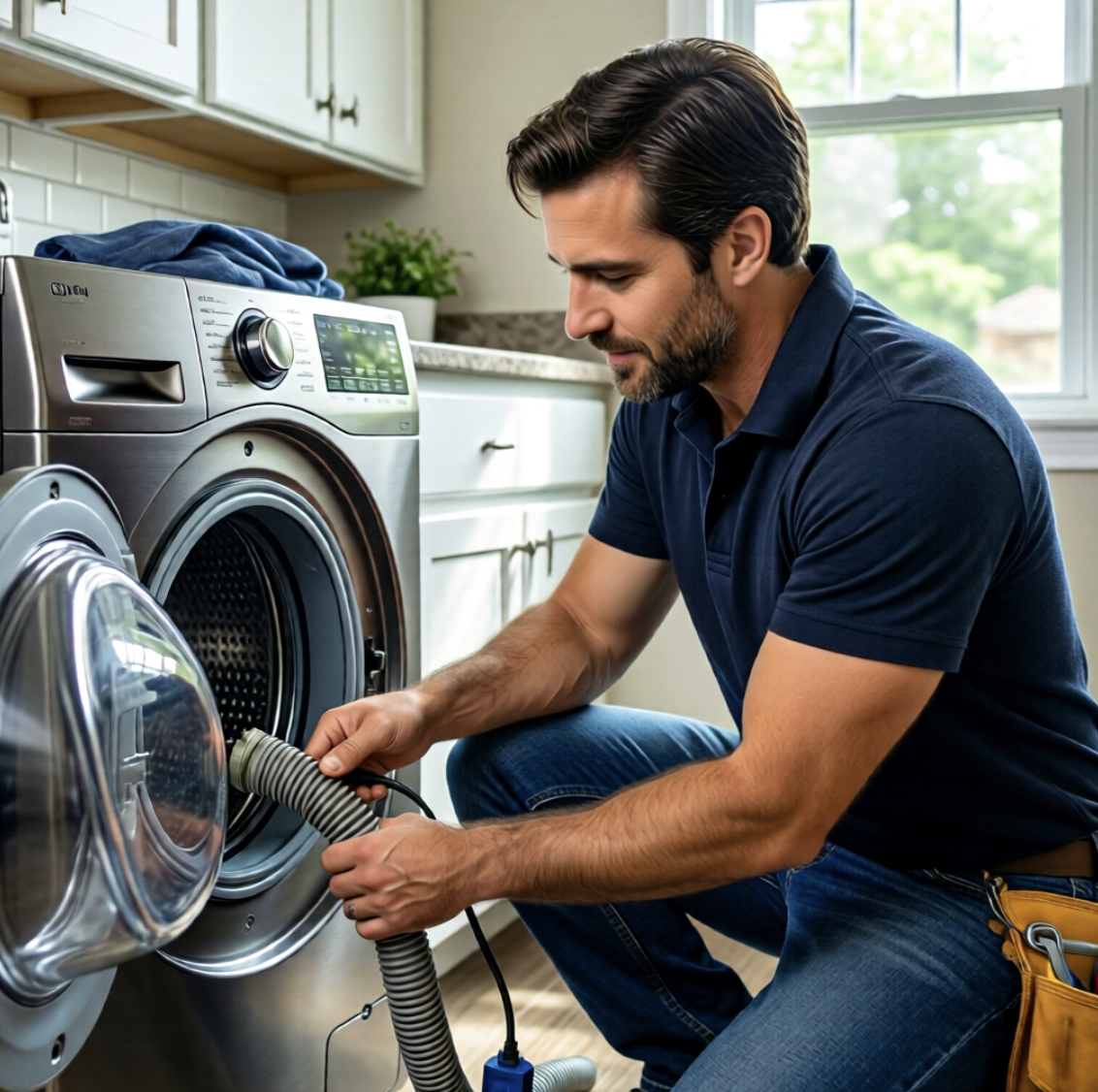
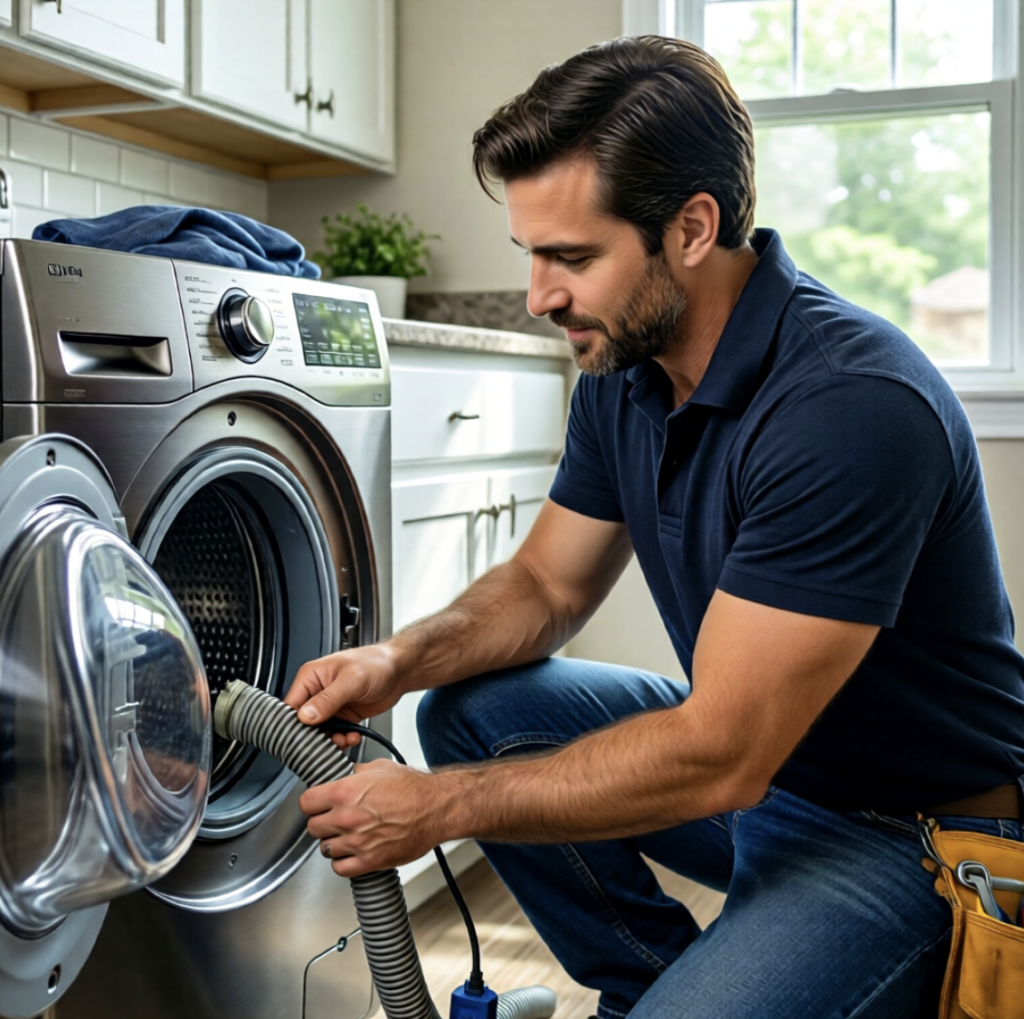
A washing machine that suddenly stops working can be frustrating, but not every problem requires professional repair. In many cases, the cause may be something simple that homeowners can safely identify before scheduling a service appointment.
Taking a few minutes to perform basic checks may help determine whether the issue is minor or whether professional repair is actually needed.
1. Check the Power Supply
One of the simplest causes is also one of the most common.
Before assuming the washing machine has failed, make sure:
- The power cord is securely plugged in.
- The outlet is working properly.
- The circuit breaker has not tripped.
- Any power strip or extension cord is functioning correctly (if one is being used).
If another appliance also fails to work from the same outlet, the issue may be electrical rather than mechanical.
2. Make Sure the Door or Lid Is Fully Closed
Most modern washing machines include safety switches that prevent operation unless the door or lid is completely closed.
Check for:
- Clothing caught in the door seal
- A damaged door latch
- An object preventing the door from locking properly
Even a slightly open door can prevent the machine from starting.
3. Confirm the Water Supply Is Turned On
If the washer powers on but does not begin filling with water, inspect the water supply.
Check whether:
- Both water supply valves are fully open.
- The inlet hoses are kinked or bent.
- Water pressure is available throughout the home.
Some machines will not continue a cycle if they cannot detect an adequate water supply.
4. Inspect the Drain Hose
A blocked or improperly installed drain hose may interrupt normal operation.
Look for:
- Kinks in the hose
- Visible clogs
- A drain hose inserted too deeply into the standpipe
- Water backing up during draining
Proper drainage is essential for many wash cycles to complete successfully.
5. Avoid Overloading the Machine
Loading too many clothes into the drum can prevent the washer from operating correctly.
An overloaded machine may:
- Fail to spin
- Stop during the cycle
- Vibrate excessively
- Display an error code
Following the manufacturer’s recommended load capacity can reduce unnecessary strain on the motor and suspension system.
6. Clean the Drain Pump Filter
Many front-loading washers include a drain pump filter that collects lint, coins, buttons, and other small objects.
If the filter becomes clogged, the machine may:
- Drain slowly
- Stop mid-cycle
- Display a drainage error
- Refuse to spin
Always disconnect power before cleaning the filter, and follow the manufacturer’s instructions.
7. Look for Error Codes
Modern washing machines often display diagnostic codes when a problem occurs.
Consulting the owner’s manual or the manufacturer’s official support resources may help identify issues related to:
- Water supply
- Drainage
- Door lock
- Motor
- Sensors
- Electronic controls
Understanding the error code can help determine whether the problem is simple or requires professional service.
When Should You Call a Repair Technician?
Professional diagnosis is generally recommended if:
- The washer has no power after electrical checks.
- There is a burning smell.
- Water is leaking from inside the machine.
- The drum does not rotate despite normal power.
- Loud grinding or metal noises occur.
- The machine repeatedly displays the same error after basic troubleshooting.
- Electrical components appear damaged.
Attempting to repair internal electrical or mechanical parts without proper training may increase the risk of injury or further damage.
Preventive Maintenance Tips
Simple maintenance can help extend the life of a washing machine:
- Clean the drain filter regularly.
- Leave the door open after use to reduce moisture buildup.
- Avoid consistently overloading the drum.
- Inspect water hoses for wear or leaks.
- Run a washing machine cleaning cycle as recommended by the manufacturer.
The Bottom Line
A washing machine that stops working does not always require immediate repair. Basic checks—such as verifying the power supply, confirming the door is fully closed, inspecting the water supply, cleaning the drain filter, and reviewing any error codes—may help identify common issues before scheduling professional service. If these steps do not resolve the problem or if there are signs of electrical or mechanical failure, contacting a qualified appliance technician is the safest course of action.