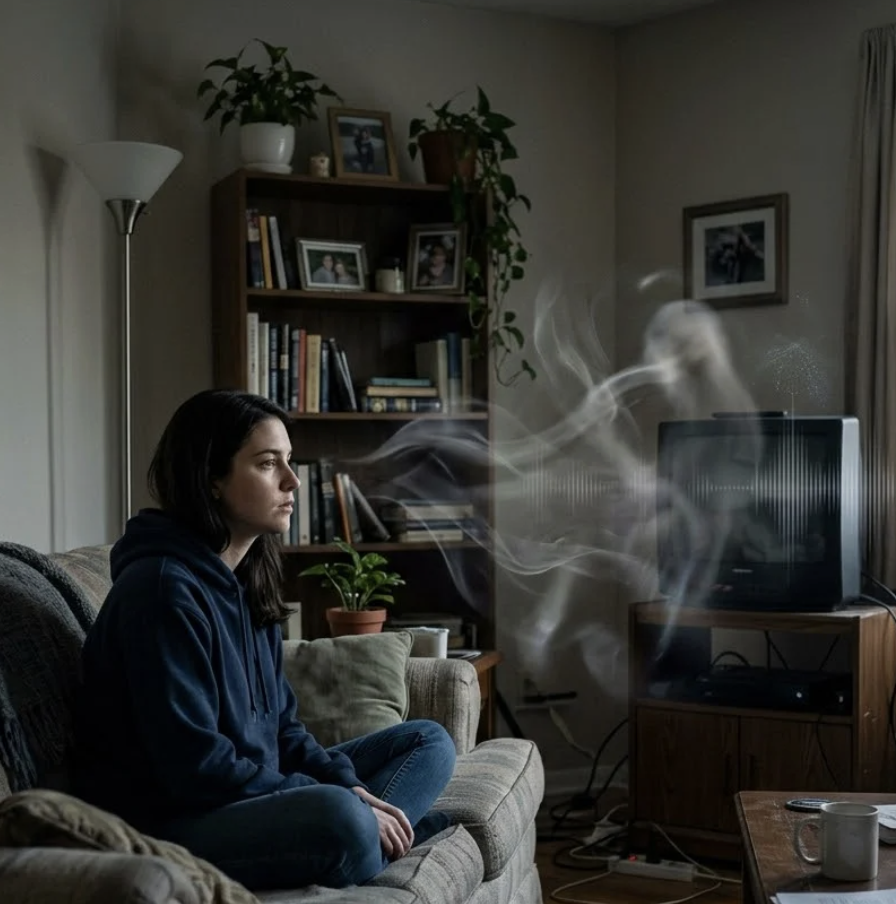
HALLUCINATIONS IN THE SILENT ROOM
Imagine entering a room so quiet that you can hear your own heartbeat.
No television.
No music.
No conversations.
No traffic outside.
No notifications.
No familiar sounds at all.
Just silence.
At first, that might sound peaceful.
But what if the silence lasted for days?
What if there was nothing to distract your mind?
No voices.
No movement.
No stimulation.
Only yourself.
How long would it take before your brain began creating its own reality?
The Experiment
A man volunteered for an isolation experiment designed to study how humans react to prolonged sensory deprivation.
The room was simple.
A bed.
Basic supplies.
Food.
Water.
Lighting.
Security cameras.
Nothing dangerous.
Nothing supernatural.
The goal was straightforward.
Remain alone.
No contact with other people.
No phone.
No internet.
No outside entertainment.
Researchers wanted to understand what happens when the brain receives very little stimulation for an extended period.
At first, everything seemed normal.
The participant spent time thinking, resting, exercising, and observing his surroundings.
The first day passed without incident.
The second day felt longer.
Time seemed slower.
Minutes stretched.
Hours felt strangely distorted.
Still, he remained calm.
Researchers saw no major concerns.
Then the third day arrived.
The First Sounds
Late that evening, the participant reported hearing footsteps.
Slow footsteps.
Outside the room.
Back and forth.
Back and forth.
The sound seemed clear.
Distinct.
Close enough that he believed someone was standing nearby.
Researchers checked the recordings.
No one had approached the room.
The hallway was empty.
The sound existed only in his perception.
The next morning, he remained convinced he had heard something.
He wasn’t frightened yet.
Only confused.
That confusion would not last.
Day Four
The following day, the experience intensified.
The participant reported hearing someone whisper his name.
Not loudly.
Not repeatedly.
Just once.
A soft voice.
Close to his ear.
When he turned around, nobody was there.
Security footage confirmed he was alone.
Researchers noted the event but allowed the experiment to continue.
Then came the first visual disturbance.
A shadow appeared in the corner of the room.
At least that’s what the participant reported.
He described a figure standing motionless near the wall.
Watching him.
The image vanished when he looked directly at it.
Minutes later it returned.
Again and again.
Yet the cameras showed nothing.
Only an empty room.
When the Brain Creates Reality
Scientists have long known that sensory deprivation can produce unusual experiences.
The brain evolved to process enormous amounts of information.
Sounds.
Movement.
Light.
Voices.
Faces.
Environmental changes.
When those inputs disappear, the brain does not simply shut down.
Instead, it may begin generating stimulation on its own.
Researchers sometimes compare it to dreaming while awake.
The brain searches for patterns.
Creates interpretations.
Fills empty spaces.
In some cases, this process produces harmless distortions.
In others, it can create vivid hallucinations.
People may hear voices.
See movement.
Feel touches that never occurred.
Experience a powerful sense that another person is present.
The experiences often feel completely real.
Because to the brain, they are.
Isolation and the Human Mind
Human beings are deeply social creatures.
Our brains developed in environments filled with constant interaction.
Conversations.
Facial expressions.
Sounds of other people nearby.
Isolation removes many of those familiar signals.
As hours become days, the mind begins reacting in unexpected ways.
Some individuals become anxious.
Others become emotional.
Some lose track of time.
Many report altered perceptions.
This does not necessarily indicate mental illness.
It reflects how strongly the brain depends on stimulation to maintain a stable picture of reality.
The participant in the experiment experienced many of these effects.
Yet one event disturbed researchers more than the rest.
The Knock
During the fifth night, the participant reported hearing knocking.
Three sharp knocks.
Coming from the door.
He approached cautiously.
Nobody stood outside.
Security cameras confirmed the hallway remained empty.
Researchers initially believed the sound was another hallucination.
A product of prolonged isolation.
The participant completed the experiment shortly afterward.
Medical evaluations showed no lasting neurological problems.
The hallucinations gradually faded.
The voices stopped.
The shadows disappeared.
Everything seemed to return to normal.
The experiment appeared complete.
Then something unexpected happened.
After the Experiment
Several weeks later, the participant contacted the research team.
The knocking had returned.
Every night.
Around the same time.
Three knocks.
Always the same pattern.
At first, researchers assumed anxiety or lingering psychological effects might explain the experience.
Then he shared something unusual.
His apartment’s hallway security system had captured audio.
The recordings contained a faint sound.
Three knocks.
The same pattern he described.
Investigators reviewed the footage.
No visible person appeared.
No obvious source could be identified.
Only the sound itself.
The Scientific Explanation
Before jumping to supernatural conclusions, researchers offered several possibilities.
Buildings make noise.
Pipes expand.
Heating systems create vibrations.
Doors shift.
Environmental sounds travel through structures in unexpected ways.
The participant, already sensitized by the experiment, may have become unusually aware of ordinary sounds.
Once he noticed them, his brain could have assigned special meaning to them.
This explanation remains the most likely.
Yet the story continued circulating because of one uncomfortable detail.
The knocks recorded after the experiment were not part of the original sensory deprivation environment.
They occurred afterward.
In a completely different location.
And that fact made the story difficult to forget.
The Real Mystery
The most fascinating aspect of the experiment isn’t whether the knocks were supernatural.
It is what the experience reveals about the human mind.
Reality feels solid.
Reliable.
Permanent.
Yet our perception of reality depends on a brain constantly interpreting incomplete information.
When stimulation disappears, the brain fills the gaps.
When isolation grows, perception changes.
When uncertainty appears, the mind searches desperately for explanations.
The result can be startlingly convincing.
The Final Twist
The frightening part is not that someone saw a shadow.
Or heard a voice.
Or imagined footsteps.
Science can explain many of those experiences.
The unsettling part is realizing how easily the brain can blur the line between what exists and what merely feels real.
And perhaps that is why stories like this remain so powerful.
Because the true mystery is not what was in the room.
The true mystery is how much of the world we experience is created by the brain itself.
And once that question enters your mind, another follows:
If your brain can create voices, figures, footsteps, and entire experiences from silence alone…
How certain can you ever be that every sound in the dark comes from something outside of you?
Leave a Reply